make preferable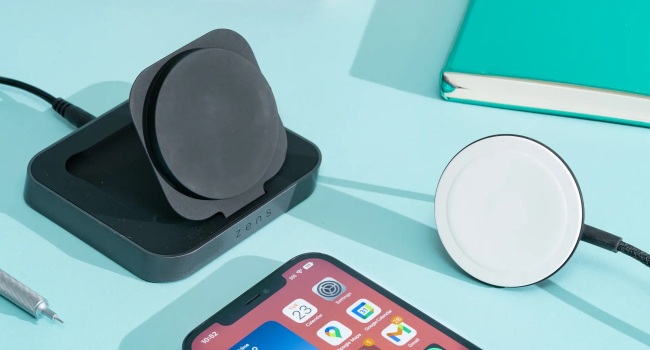
Wireless chargers for smartphones are becoming increasingly popular, yet many users still prefer a cable. Is it worth switching to new technology? Below is an explanation of why wireless charging is not only convenient but also safe, along with an overview of the Qi2 standard and examples of devices from Baseus.
Safety: myths and facts
When wireless charging first appeared, concerns arose about potential harm from radiation. These myths were quickly debunked:
- Non-ionizing radiation: wireless chargers operate at low frequencies that are safe for humans.
- Short range: energy is transferred over just 1–2 cm, which poses no risk.
“If a charger is lying on a table, it cannot harm you,” experts confirm. Scientific studies show that wireless charging devices are safe even with prolonged use.
Why hasn’t everyone switched to wireless charging?
Earlier versions of the technology had several limitations:
- Limited availability: support was mostly found in flagship smartphones, making it expensive.
- Inconvenience: the phone had to be placed very precisely on the charger so the coils aligned. Any shift would stop charging.
- Lack of mobility: charging on the go or inside a bag was not practical.
An exception was Apple devices with the MagSafe magnetic system, which simplified alignment.
The new Qi2 standard: convenience and power
The Qi2 standard, introduced in 2023, addresses these drawbacks:
- Power up to 36 W: almost twice as much as the original Qi standard (15 W).
- Magnetic attachment: the smartphone automatically aligns with the charger, similar to MagSafe.
- Wider availability: the technology has reached mid-range smartphones, not just flagships.
Now charging is simple: place the phone on the charger and the magnets ensure perfect alignment.
Baseus devices: examples of convenience
Baseus, a company with more than 10 years of experience in charging solutions, offers several Qi2-compatible products. Here are a few examples:
- Baseus PicoGo Qi2 2-in-1
- Functions: wired charging (up to 67 W, suitable for laptops) and wireless charging (up to 15 W).
- Design: a compact cube with a fold-out stand to keep the smartphone screen visible.
- Pros: magnetic attachment, secure fixation, simultaneous charging of two devices.
- Cons: requires a power adapter of at least 100 W (sold separately).
- Baseus PicoGo AM41 Ultra-Slim
- Type: 10,000 mAh power bank.
- Charging: wireless (up to 15 W) and wired (up to 27 W).
- Features: only 1.3 cm thick, three-layer cooling system (aluminum, graphene, and a chip that monitors temperature 18,000 times per hour).
- Pros: compact size, can charge two devices at once, easy to carry in a pocket.
- Baseus Simple Mini 4 Air
- Type: compact wireless charger (up to 15 W).
- Design: minimalist, with a fold-out ring stand.
- Pros: takes up little space, ideal for desk use.
- Cons: wireless charging only, no wired mode.
Why choose wireless charging?
- Convenience: no cables, just place the phone on the charger.
- Mobility: Qi2 power banks allow charging on the go.
- Aesthetics: devices look stylish and compact.
- Accessibility: the technology is now available in the mid-range segment.
Every year, cables disappear from more aspects of daily life, and charging is no exception. Qi2 makes the process intuitive and reliable.
In brief
Wireless chargers with Qi2 are safe, convenient, and accessible. The new standard, with magnetic alignment and power up to 36 W, eliminates old issues, while Baseus devices such as PicoGo and Simple Mini make charging both stylish and practical. If your smartphone supports Qi2, it may be time to give up cables and enjoy greater freedom.