make preferable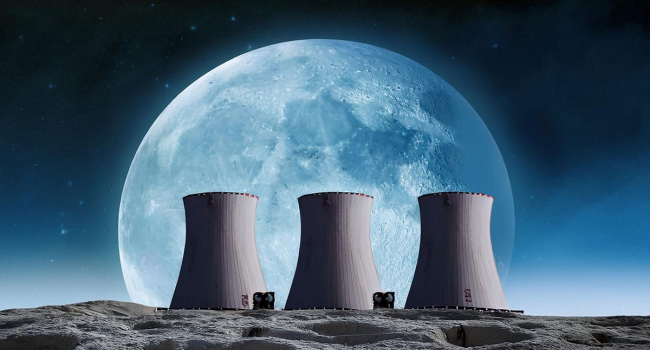
Roscosmos has taken an important step in its lunar program. In December 2025, the state corporation signed a contract with NPO Lavochkin to develop and build a Russian lunar power station. The work is scheduled to run through 2036, which is when the facility is planned to be deployed on the surface of Earth’s natural satellite.
Why the Moon needs its own power plant
The project is a key element in the transition from one-off missions to a permanent scientific base on the Moon. Without a reliable source of energy, long-term presence is impossible: solar panels only work during the lunar day, while a lunar night lasts about two weeks. A nuclear power plant would provide stable electricity for scientific instruments, habitats, and supporting infrastructure.
Roscosmos emphasizes that this is the foundation for a continuously operating lunar station, where astronauts and robotic systems could work for years at a time.
Context of Russia’s lunar program
This is not the first ambitious plan in Russia’s space strategy. In January 2025, academician Vladimir Solovyov, general designer of RSC Energia, announced that the first module of Russia’s new orbital station is scheduled to launch in December 2027. That station is intended to replace the ISS after its retirement and serve as the backbone of future crewed spaceflight.
The lunar power plant fits into this broader strategy: reliable energy on the surface is essential for resource extraction, construction, and scientific research.
International background
Russia is not alone in this direction. NASA, through the Artemis program, plans a base near the Moon’s south pole, while China is developing the International Lunar Research Station. Nuclear energy is a shared trend: the United States is working on the Kilopower reactor concept, and Russia is developing its own counterpart.
In brief
Roscosmos has signed a contract to create a lunar nuclear power plant by 2036, a major step toward establishing a permanent base on the Moon with stable power supply. The project complements plans for a new Russian orbital station, whose first module is set to launch in 2027, and marks a shift from short-term missions to a long-term lunar presence. Russia is strengthening its position in the new lunar race.