make preferable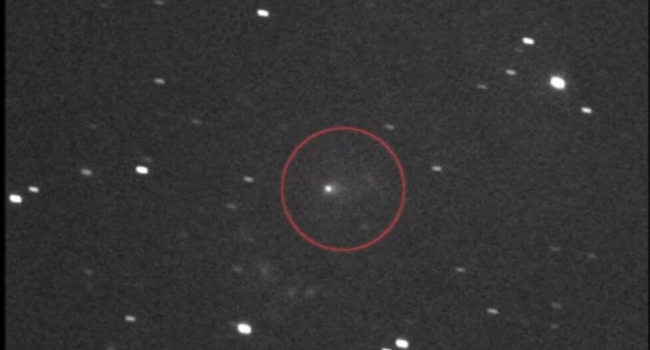
On Friday, December 19, 2025, the interstellar comet 3I/ATLAS will reach its closest point to Earth — an extremely rare event that will allow astronomers to study the chemistry of another stellar system. This is only the third confirmed interstellar object ever observed in our Solar System, following ‘Oumuamua (2017) and Borisov (2019).
A Safe Distance — and a Unique Scientific Opportunity
The comet will pass at a distance of 1.8 astronomical units, or about 270 million kilometers, nearly twice the average distance between Earth and the Sun. According to the European Space Agency (ESA), there is absolutely no threat to Earth.
The scientific value, however, is enormous. As the comet approaches the Sun, its ice begins to sublimate, releasing dust and gases — material that formed around a distant star. Studying this material will help scientists understand how comets and planetary systems form in other parts of the galaxy.
How the Comet Was Discovered and Is Being Observed
3I/ATLAS was discovered on July 1, 2025, by NASA’s ATLAS telescopes in Chile. Since then, it has been closely monitored by the Hubble Space Telescope, the JUICE spacecraft, and ground-based observatories. Recently released images from Hubble and JUICE show the comet moving through the inner Solar System.
How to Watch It Online
On December 19 at 04:00 Moscow time (11:00 p.m. EST on December 18), a free live stream hosted by the Virtual Telescope Project, led by Gianluca Masi, will begin. Weather permitting, the comet will be shown in real time. Further details will be announced closer to the date.
In Brief
On December 19, interstellar comet 3I/ATLAS will pass Earth at a safe distance of about 270 million kilometers, close enough for detailed study of its composition. It is the third known visitor from another star system. Watch it online via the Virtual Telescope Project — a rare chance to see a true messenger from the depths of the galaxy.