make preferable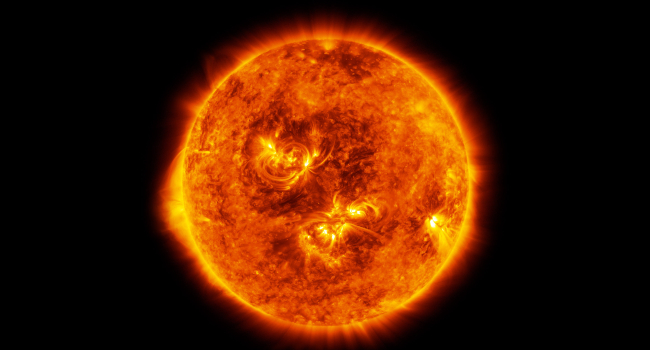
Physicists from the University of Oxford and the SNO+ collaboration have achieved something that researchers had awaited for decades: for the first time, they directly detected collisions between solar boron neutrinos and carbon-13 nuclei. This is one of the rarest nuclear reactions in the universe, and its observation marks a major triumph for neutrino astronomy. The results were published in 2025.
Why This Is So Difficult
Neutrinos are often called “ghost” particles because they barely interact with matter and pass through Earth at the speed of light. Trillions of solar neutrinos pass through every square centimeter of the human body each second, yet the probability that even one of them collides with an atom is extremely small.
Boron neutrinos are produced in the hottest region of the Sun’s core during the decay of boron-8. They are the most energetic neutrinos generated by our star. Theorists had long predicted that these particles could knock a proton out of a carbon-13 nucleus, transforming it into unstable nitrogen-13. However, the likelihood of this occurring is roughly one reaction per billion trillion neutrinos.
How the “Ghost” Was Caught
The SNO+ detector is an acrylic sphere 12 meters in diameter filled with 780 tons of ultrapure liquid scintillator and surrounded by 10,000 photodetectors. It is located 2 kilometers underground in a Canadian mine to shield it from cosmic rays. When a neutrino does collide with carbon-13, a positron and a neutron are produced, and the resulting nitrogen-13 decays almost instantly while emitting a gamma ray. This sequence generates a characteristic double flash of light, which the sensors are able to detect.
Over a year of observations (May 2022 to June 2023), the detector recorded exactly five such events — the precise number predicted by theory.
What This Means
The discovery not only confirms solar model calculations but also closes one of the last remaining gaps in the understanding of nuclear processes in stars. It also provides another piece of evidence that neutrinos have mass, a fact for which the 2015 Nobel Prize in Physics was awarded (based on the original SNO experiment).
In Brief
For the first time, scientists have directly detected the ultra-rare reaction of boron neutrinos with carbon-13 — five events recorded in one year using the SNO+ detector. This result firmly confirms the theory of nuclear fusion in the Sun and resolves one of the longest-standing mysteries in neutrino physics. The “ghosts” of the cosmos continue to reveal how stars work.