make preferable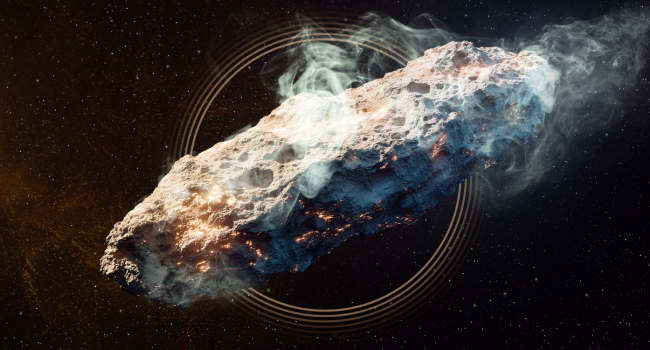
The third confirmed interstellar visitor, comet 3I/ATLAS, discovered on July 1, 2025 by the Chilean ATLAS telescope, became the brightest and most active object of its kind ever observed. During the 43-day U.S. government shutdown, online speculation portrayed it as everything from an “alien ship” to an object with “non-gravitational acceleration.” At its first briefing after work resumed, NASA made the situation clear: this is a normal comet, although extremely ancient and chemically unusual. The agency summarized four key facts based on data from more than 20 space missions.
1. It Is Definitely a Comet, Not an Alien Probe
Speculation had escalated from the first weeks after discovery, including a preprint by Avi Loeb’s group and jokes by Elon Musk. The issue peaked when Kim Kardashian publicly urged NASA to “tell the truth.”
NASA’s Deputy Administrator Amit Kshatriya began the briefing by stating that the agency was eager to find signs of life in the universe, but that 3I/ATLAS should be regarded as a comet.
The agency stressed that no technosignatures or anomalous maneuvers had been detected. The object behaved like a classical long-period comet: it heated up, sublimated ice, and formed a coma and tail. Its closest approach to Earth would be about 269 million kilometers in December 2025, and to Jupiter about 53 million kilometers in March 2026. No threat exists.
2. The Entire Solar System Worked Like One Giant Telescope
Because the comet’s position relative to the Sun made ground-based observations difficult, NASA assembled a coalition of more than 20 missions in August 2025, spanning from Earth orbit to Mars and the asteroid belt.
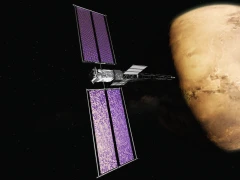
• Mars Reconnaissance Orbiter photographed the coma from 145 million kilometers.
• MAVEN detected ultraviolet hydrogen emission from 32 million kilometers.
• The James Webb Space Telescope obtained the first infrared spectrum of an interstellar object in history.
• Hubble determined the nucleus size to fall between 427 meters and 5.6 kilometers and showed that the coma had a pear-shaped form.
• Even SOHO, which normally would not detect such a faint object, picked it up in October.
Tom Statler, NASA’s lead specialist on small bodies, explained that the effort was similar to watching a baseball game from different stands: each observer had a unique angle and instrument, yet everyone was observing the same ball.
3. The Comet Is Older Than the Sun and Carries the Chemical Signature of Another System
Its entry speed of roughly 60 km/s indicated that 3I/ATLAS had spent billions of years in interstellar space. Indirect evidence suggested that it originated in a planetary system hundreds of millions — or possibly billions — of years older than our own.
JWST detected an unusually high CO₂-to-H₂O ratio, several times greater than that seen in Kuiper Belt comets. This pointed to a harsher radiation environment around its parent star, likely a red dwarf or a long-extinct white dwarf.
4. Its Chemical Composition and Dust Behavior Are Unusual
Although the comet behaved in a textbook manner, several features stood out:
• Its gas envelope was unexpectedly rich in nickel relative to iron.
• Its dust was blown toward the Sun for an unusually long time before radiation pressure finally pushed the tail outward.
• The dust grain sizes differed from those typical of Solar System comets.
Together, these characteristics served as direct chemical records from a foreign stellar nursery that may be 5–10 billion years old.
In Brief
3I/ATLAS is unquestionably an ancient natural comet, not an alien spacecraft. Thanks to an unprecedented coalition of more than 20 spacecraft, NASA assembled the most detailed portrait of any interstellar object to date, from JWST’s infrared spectrum to images taken from Mars orbit. The comet turned out to be older than the Sun and exhibited unusually high CO₂ and nickel content, making it a genuine time capsule from a much older planetary system. Scientists noted that such visitors offer a unique opportunity to study the chemistry of the universe before Earth was born.