make preferable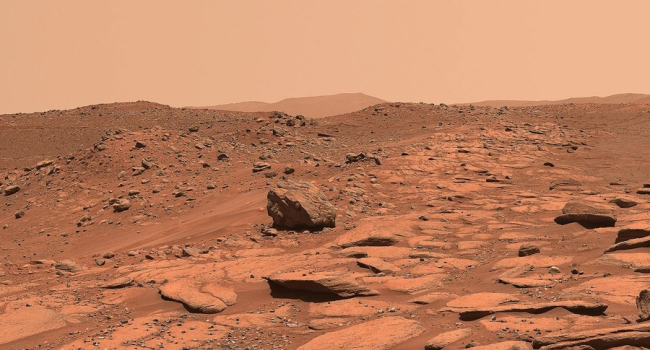
A sensational study has been published in the journal Nature: the Perseverance rover has accidentally recorded miniature electrical discharges occurring directly inside Martian dust devils. This is the first observational proof of a phenomenon that for decades existed only in laboratory models and theoretical calculations.
How it happened
The microphone of the SuperCam instrument (the only working microphone on Mars) recorded ordinary wind noise and dust movement on September 29, 2021 (sol 188), and October 6, 2022 (sol 575). On both occasions Perseverance happened to be inside small dust devils 20 to 100 meters tall.
Amid the familiar wind roar, scientists from the University of Toulouse and Paris-Saclay detected short acoustic and electromagnetic pulses lasting fractions of a second — characteristic clicks and high-frequency spikes. Analysis showed that these were miniature discharges only a few centimeters long, similar to static electricity we feel when rubbing a wool sweater.
Why this happens more easily on Mars than on Earth
The Martian atmosphere is 100 times thinner than Earth’s, so the breakdown voltage is about 30 to 50 times lower. A charge of just a few dozen picocoulombs on dust particles is enough to produce visible sparks.
The triboelectric effect (dust grains rubbing against each other) in the dry CO₂ atmosphere generates electric fields of 100 to 200 kV per meter, which is sufficient for local discharges even in small dust devils. On Earth, such discharges appear only in giant dust storms, such as in the Sahara.
What this means for science and future missions
- Martian dust devils have now been confirmed to produce electrostatic charges, an important factor for the safety of future crewed missions since discharges can damage solar panels and spacesuits.
- It has been proven that standard microphones are a powerful and inexpensive tool for planetary science, capable of detecting processes that cameras cannot see.
- Real data has been obtained for calibrating models of Martian atmospheric electricity, which will help forecast major dust storms.
- These discharges may be one of the mechanisms that produce hydrogen peroxide and other oxidizers in the regolith, which helps explain why Martian soil is so hostile to organic compounds.
In short
Perseverance has recorded real electrical discharges inside Martian dust devils for the first time — miniature sparks a few centimeters long, generated by triboelectric charging in the thin atmosphere. This not only confirms decades-old theoretical predictions but also shows that a simple microphone can be one of the most valuable scientific instruments on the Red Planet.