make preferable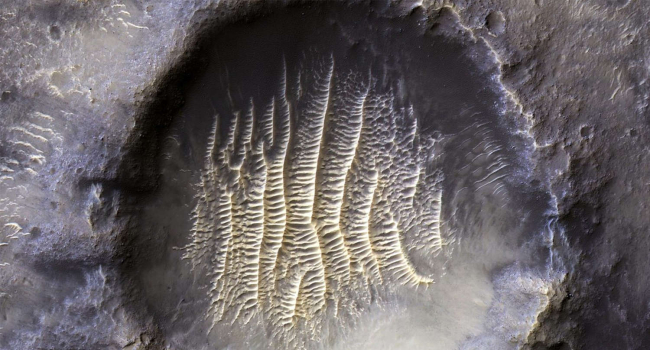
Scientists have, for the first time, demonstrated that active biological methane production is occurring deep inside a large meteorite crater on Earth. A study published in mBio showed that a microbial community lives in fractured rocks beneath Sweden’s Siljan crater (52 km in diameter, about 380 million years old) and converts carbon into methane using what is considered the most ancient biochemical pathway known. The discovery directly strengthens the case that similar processes could be taking place right now in Martian craters, where NASA and ESA have detected mysterious bursts of CH₄.
What Was Found Beneath the Siljan Crater
A team from Linnaeus University (Sweden) and GFZ Potsdam collected samples of groundwater from depths of 400 to 600 meters inside the crater. In laboratory cultures, microbes began producing methane aggressively from various substrates, including local oil and dissolved CO₂. Genomic and transcriptomic analyses identified two key organisms:
- Acetobacterium KB-1, a bacterium that converts carbon into methyl groups in acetate
- Candidatus Methanogranum gryphiswaldense, an archaeon that relies exclusively on the methyl-reducing Wood–Ljungdahl pathway to synthesize methane
This pathway is considered one of the oldest on Earth; it was already operating in LUCA (the Last Universal Common Ancestor) 3.8 to 4.1 billion years ago. Importantly, the process leaves a distinct isotopic signature, characterized by strong depletion in ¹³C, which cannot be mistaken for abiogenic methane.
The study’s lead author, Femke van Dam, explained that impact craters should not be viewed as dead scars, since they create networks of fractures through which water and nutrients circulate, turning them into ideal subsurface oases.
Why This Matters for Mars
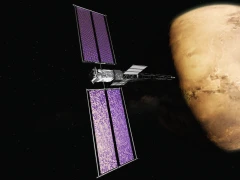
Methane on Mars has been recorded since 2003 by missions such as Mars Express, Curiosity, and TGO. The strongest spikes, reaching 20 to 60 ppb, occur during northern-hemisphere summer and geographically coincide with ancient impact structures such as Gale crater, Acidalia Planitia, and the Arabia Terra region. Until now, there have been two major explanations for these emissions:
- Geochemical processes (such as serpentinization)
- Biological processes (such as methanogenic microbes)
The new research provides the first Earth-based analogue: living methane-producing microbes inside an impact crater, using the same ancient metabolic pathway and leaving the same isotopic fingerprint that Mars missions have detected.
Where to Look in the Coming Years
- ExoMars Rosalind Franklin (launch in 2028, landing in 2029) carries a two-meter drill and the MOMA mass spectrometer, instruments well suited to searching for the methyl-reducing pathway in the Oxia Planum crater
- China’s Tianwen-3 (2028–2030) aims to return samples from Utopia Planitia, another region where methane has been detected
- NASA’s Mars Sample Return program (2031 and beyond) could bring rocks from Jezero crater, where Curiosity has already found organic molecules and seasonal CH₄ variations
Summary
At a depth of half a kilometer beneath Sweden’s Siljan crater, scientists have discovered a living microbial ecosystem that produces methane using the oldest known biochemical pathway. This is the first terrestrial example of active methanogenesis inside an impact structure, and a direct analogue to what may be happening in Martian craters where unexplained CH₄ spikes have been observed. The finding significantly increases the likelihood of detecting an active Martian biosphere within the next decade and gives upcoming missions a clear strategy: drill deeply inside impact craters.