make preferable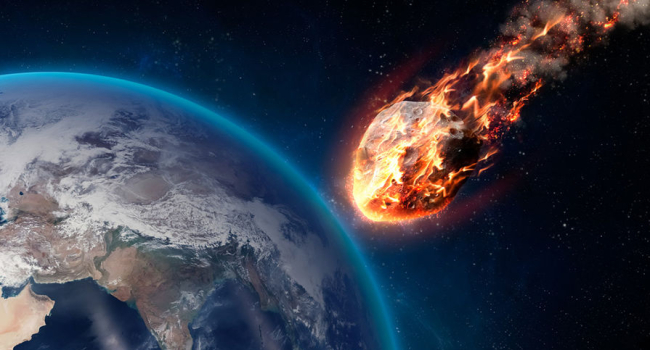
On October 27, 2025, residents of Central Russia observed a bright fireball, and in the Novgorod region a piece of cosmic rock broke through the roof of a private house. The event is extremely rare; over the past decades, only a few similar cases have been recorded in Russia. In an interview with Gazeta.Ru, astronomer Evgeny Burmistrov of Perm Polytechnic explained why a repeat should not be expected anytime soon and how real the threat of larger impacts actually is.
Why Most Meteors Never Reach the Ground
Every day, fifty to one hundred tons of cosmic material enter Earth’s atmosphere, but 99.9 percent of it consists of dust and tiny particles no larger than grains of sand. They completely burn up at an altitude of eighty to one hundred twenty kilometers, leaving only a beautiful shooting star trail. For an object to reach the surface as a meteorite and cause damage, it must:
- have a mass of at least several dozen kilograms
• be sufficiently strong, such as an iron or stony iron meteorite rather than a fragile chondrite
• enter the atmosphere at a favorable angle and not at excessive speed
Such conditions are extremely rare. Events like this occur approximately once every few years across the entire planet.
Upcoming Meteor Showers Will Be Beautiful but Safe
In November and December 2025, several meteor showers will reach their peaks:
- Leonids, ending soon
• Geminids, peak December thirteen to fourteen, up to one hundred twenty meteors per hour
• Ursids, peak December twenty two
These are spectacular but completely safe. The particles in these showers are remnants of comets; they are tiny and burn up entirely. “The Geminids are one of the most intense showers of the year, but even here ninety nine point nine nine percent of the material turns into dust,” Burmistrov emphasizes.
Probability of Another Meteorite Breaking Through a House
According to NASA and the International Meteor Organization, an object similar in size to the Novgorod meteorite, about half to one kilogram after atmospheric entry, falls on Russian territory roughly once every seven to ten years. Large scale events like the 2013 Chelyabinsk fireball, with an estimated mass of about twelve thousand tons before entry and energy of about five hundred kilotons, occur once every fifty to one hundred years.
“Predicting such isolated impacts is practically impossible. They are not associated with known meteor showers. The probability of another damaging incident in the coming weeks or even years is vanishingly small,” the scientist concludes.
Only genuine threats are tracked in advance: asteroids with diameters greater than thirty to fifty meters. For example, Apophis will pass at a safe distance in 2029. Smaller rocks capable of penetrating a roof are detected only seconds before atmospheric entry, as happened in Chelyabinsk and now in Novgorod.
In Short
The meteorite that broke through a house in the Novgorod region is an exceptionally rare event. The upcoming meteor showers such as the Geminids and Ursids will be beautiful but completely safe; ninety nine point nine percent of particles burn up in the atmosphere. A damaging meteorite fall in Russia happens once every seven to fifteen years and cannot be predicted. According to astronomer Evgeny Burmistrov, a repeat event is not expected anytime soon, so people can safely enjoy the meteor showers without worrying about their roofs.