make preferable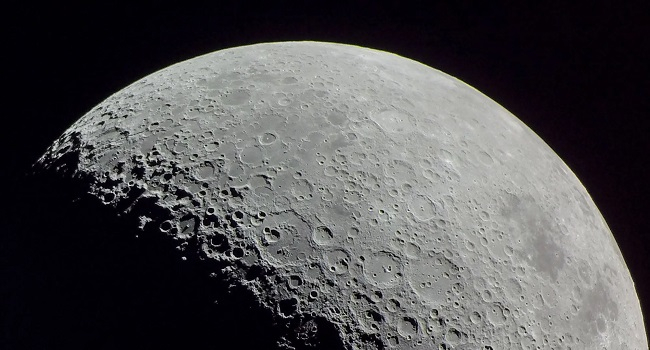
When Frank Sinatra sang Fly Me to the Moon in 1964, humanity still had no idea who would be the first to set foot on the lunar surface. Today we are heading back to the Moon — not for flags and footprints, but to stay. The United States, China, Russia, India, Europe, and dozens of other nations are planning permanent bases at the Moon’s south pole, where billions of tons of water ice lie hidden in the eternal shadow of craters. That ice could become fuel and drinking water for future lunar settlements. The problem is that the resource is limited, and good landing sites are even rarer. History shows that when multiple powers compete for scarce resources in a remote location, peace is never guaranteed.
But the twenty-first century is not the nineteenth. We have a chance not to repeat a lunar version of the “Wild West.” Here is how that could be done.
1. The 1967 Outer Space Treaty — a foundation that still works
According to Space.com, the main international legal safeguard is the Outer Space Treaty, signed by more than 120 countries, including the United States, Russia, and China. Its core principles are:
- The Moon and other celestial bodies cannot be claimed by any nation
- Outer space is the province of all humankind
- Nuclear weapons and military bases are prohibited in space
The challenge is that the treaty says nothing about resource extraction. Can a country harvest lunar ice and turn it into fuel without violating the ban on asserting sovereignty? Legal experts are still debating the answer.
2. The Artemis Accords — an American “code of conduct”
In 2020, the United States launched the Artemis Accords, a set of voluntary principles for countries participating in NASA’s Artemis program. As of November 2025, fifty-six nations had signed on (including Thailand and Senegal, which also take part in China’s ILRS project).
Key ideas include:
- Extracting resources does not count as claiming territory
- Missions can establish temporary “safety zones” around operations to avoid interference
- Signatories commit to transparency and coordination
Critics — especially China and Russia — argue that safety zones are simply a disguised form of territorial control. Supporters respond that they work more like maritime buoys: nobody owns the ocean, but ships are still expected not to collide.
3. The 1979 Moon Agreement — a ready-made but forgotten tool
The most ambitious legal framework is the 1979 Moon Agreement, adopted by the UN. It states:
- Lunar resources are the common heritage of humankind
- Extraction is only permitted under an international regime (similar to deep-sea mining)
- All missions must operate transparently
The problem is that only eighteen countries have signed it — and none of the major space powers (the United States, Russia, China) are among them. Still, even a handful of nations applying it in practice could create an important precedent.
4. Building bridges instead of walls: the role of intermediary countries
Countries such as Thailand, Senegal, and the UAE participate in both the Artemis program and China’s International Lunar Research Station. They can serve as “bridges,” transferring best practices between the two blocs and nudging them toward shared standards.
5. Practical steps that can be taken right now
- Create an international registry of lunar activities — who is doing what, and where. This idea already appears in both the Artemis framework and UN discussions
- Agree on minimum sizes for safety zones (for example, 10–20 km around a base) and ensure they remain temporary
- Introduce a moratorium on mining in the most valuable craters until 2035 — long enough to develop a shared governance system
- Establish joint scientific stations in neutral areas — similar to the model used in Antarctica
Why cooperation benefits everyone
- Water ice at the south pole is limited but sufficient for centuries if used responsibly
- Joint bases are cheaper and safer than isolated national outposts
- Space can become a platform for diplomacy instead of a new arena of rivalry
In short
The Moon is too small to divide into “mine” and “yours,” and too vast for any one country to control. Humanity already has the necessary tools — the Outer Space Treaty, the Artemis Accords, and the Moon Agreement. The remaining step is simply to start using them seriously.
If we do, Fly Me to the Moon can once again become a soundtrack not for a race, but for a shared journey. On the Moon we will all just be Earthlings — no matter which flags appear on our spacesuits.