make preferable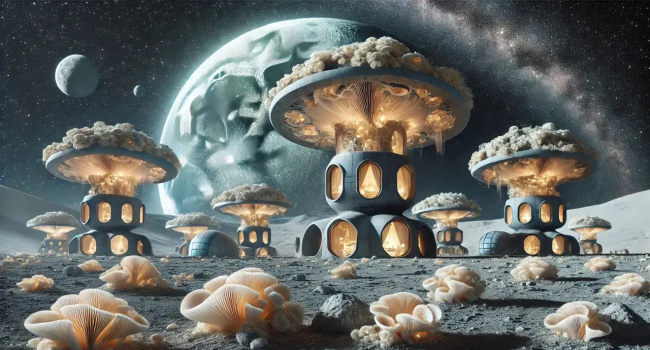
Scientists at NASA have proposed a revolutionary method for building bases on Mars using fungi, minimizing reliance on resources from Earth. As reported by Universe Today, the technology, called “mycotecture,” could become the key to creating autonomous settlements on the Red Planet.
The Problem: Limited Resources
Colonizing Mars faces a serious challenge: delivering materials from Earth is too costly and constrained by rocket payload limits. Future settlers will have to rely on local resources — water, carbon dioxide, and regolith (Martian dust).
As early as 2006, Bruce Mackenzie of the Mars Foundation proposed the Homestead concept: a base built into a hillside, where a stone wall protects against radiation, while access to the surface allows for greenhouses and storage. Such a start would require nuclear reactors and systems for extracting oxygen, fuel, and building materials from regolith and water.
Traditional ideas include:
- Bricks: firing regolith to create building blocks.
- Glass: producing it for greenhouses necessary for food production.
However, these methods require complex equipment and high energy costs, making them less practical.
Mycotecture: Homes Made of Fungi
Biologist Lynn Rothschild of NASA Ames proposed a radical solution — mycotecture, or architecture based on fungi. The idea works like this:
- Easy start: settlers bring a lightweight frame and spores of an adapted fungus.
- Growth: adding water from Martian sources activates the growth of mycelium, which envelops the frame, forming a dense, airtight material.
- Application: mycelium can be used to make “mushroom bricks” or entire domes for housing and storage.
Prototypes of such structures have already been grown on Earth. They are lightweight, strong, and eco-friendly — and most importantly, require minimal resources.
Advantages and Prospects
Mycotecture addresses key problems:
- Autonomy: reduces dependence on supplies from Earth.
- Sustainability: fungi grow from local resources without complex processing.
- Versatility: suitable for housing, greenhouses, and storage facilities.
“Fungal cities” could form the foundation of self-sufficient Martian colonies, where buildings literally “grow” on-site.
What’s Next?
NASA plans to test mycotecture under Mars-like conditions, with a focus on radiation protection and durability. The technology could complement other methods, such as 3D-printing with regolith. Missions like Artemis or future Mars expeditions will put these ideas into practice.
In Short…
NASA proposes building Martian bases from fungi, using mycelium to create strong, airtight structures. Mycotecture promises to cut costs and make colonies autonomous, turning Martian dust and water into “living” homes. This is a step toward real cities on the Red Planet — where fungi become the new building material.