make preferable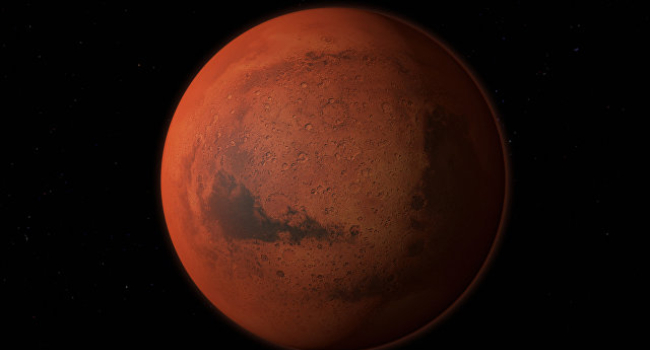
Researchers from Switzerland have found that powerful Martian earthquakes are caused not only by internal geological processes, but also by frequent collisions with meteorites. They came to this conclusion after analyzing data from the Mars InSight seismic station, which operated on the Red Planet from 2018 to 2022. The results of the study were published in the journal Geophysical Research Letters (GRL).
How did scientists find out that earthquakes are associated with meteorites?
Over four years of operation, InSight has recorded more than 1,300 seismic events. Previously, it was believed that most of them were associated with the movement of tectonic plates and internal processes in the depths of Mars. However, scientists used machine learning algorithms and compared the obtained data with images of the planet's surface taken by the HiRISE camera on the Mars Reconnaissance Orbiter satellite.
The analysis revealed 123 new craters that appeared during the mission. Of these, 49 were directly linked to the recorded seismic waves. This proved that meteorite impacts play a much larger role in Martian seismicity than previously thought.
The surface of Mars is being renewed faster than previously thought
The frequency of meteorite impacts turned out to be higher than expected: according to new calculations, collisions with space bodies occur on Mars 1.6–2.5 times more often than previously thought. This means that the planet's surface is constantly changing, which affects its structure and relief.
Interestingly, seismic waves from meteorite falls penetrate not only into the crust, but also deeper — into the mantle of Mars. This forces us to reconsider previous models of the planet's internal structure and its geological activity.
Why is this important?
The new study not only expands our understanding of Martian tectonics, but also has important practical implications. Scientists will need to take the frequency of meteorite impacts into account when designing future missions to Mars, as these events could affect the safety of equipment and settlements. The data will also help clarify the evolution of Mars and other rocky planets, including Earth in its early ages.