make preferable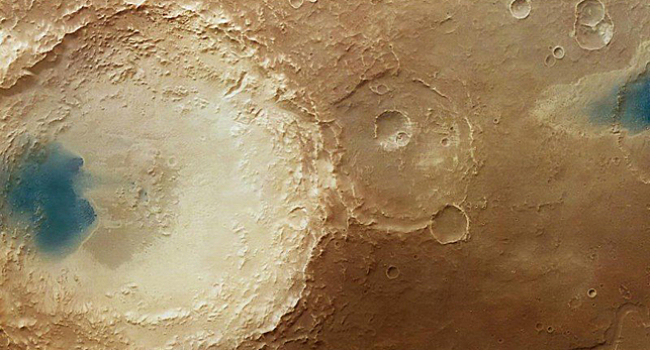
The chances of finding liquid water on the surface of Mars remain extremely low, according to an international team of researchers from the University of Arkansas and the Lunar and Planetary Institute. The study, published in Proceedings of the National Academy of Sciences (PNAS), casts doubt on some of the most discussed evidence for the existence of water on the Red Planet.
In Search of the Key to Life
For decades, scientists have sought to prove the presence of liquid water on Mars, as it is considered a critical prerequisite for the existence of life. One of the most prominent indicators of potential water presence has been recurring slope lineae—dark streaks that appear on Martian slopes during warm seasons and disappear in colder ones. These lines were long associated with possible water flows.
However, a detailed analysis of data collected by orbital probes revealed that such formations are most likely caused by the movement of dust and sand rather than water.
Brines: Theory and Reality
Some studies have suggested that brines—solutions with high salt concentrations, such as perchlorates, which can remain liquid at extremely low temperatures—might exist on Mars. However, new findings challenge their significance:
- The amount of salts capable of forming brines is too small.
- Mars’ atmospheric pressure makes these solutions unstable and short-lived.
- Ice and salt deposits are distributed very unevenly across the planet’s surface.
"Even if such brines do exist, their volumes are minuscule, and the liquids themselves are unsuitable for terrestrial organisms," explains Professor Vincent Chevrier, co-author of the study.
Continuing the Search
Despite the skeptical conclusions, scientists believe that the search for water must continue. Advances in technology, such as more sensitive instruments for detecting trace amounts of water, and precise identification of promising search areas remain key priorities.
Interestingly, even the hypothetical absence of liquid water on Mars does not rule out the possibility of life. Adapted life forms, if they exist, could survive under conditions of extreme dryness and cold, using rare brines as a liquid source.
"Mars remains a cold, dry, and harsh desert," notes Chevrier. "But science teaches us that life can emerge in the most unexpected forms and places."