make preferable
The first clinical trials of a retinal implant, which aims to restore people's visual acuity in combination with a series of wearable devices, have been completed in Europe. All patients participating in the project regained their previously lost visual acuity.
The research is developed by the American company Science Corp. The original development was created based on research by Stanford University scientists and continued by Pixium Vision, a company created for this purpose. It was later acquired by Science Corp; The PRIMA platform is a wireless and fully autonomous photoelectric implant that is surgically placed under the retina of the patient's eye, a pair of glasses with a camera and projection system, and a pocket computing unit to process and magnify images from the camera.
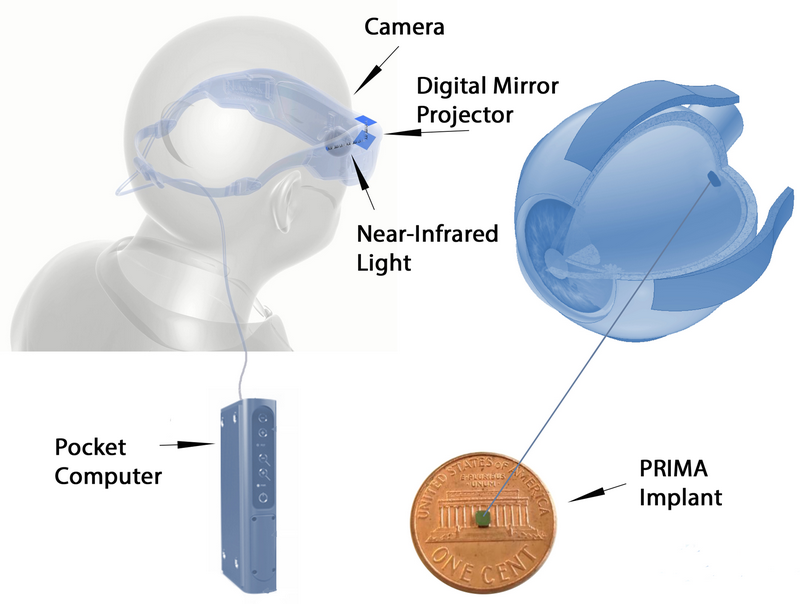
The PRIMA suite of solutions is aimed at treating age-related macular degeneration, which currently affects 8 million people worldwide. In an irreversible disease called geographic atrophy, the patient loses visual acuity, the ability to distinguish small details, which drastically reduces the quality of life. The implant restores lost visual acuity, which was proven by PRIMAvera clinical trials involving 38 patients.
"The results obtained represent an important milestone in the treatment of severe vision loss caused by age-related macular degeneration due to geographic atrophy. This is the first time that vision in the central retina, impaired by age-related macular degeneration, has been restored," said Professor Frank Holtz, MD, scientific coordinator of the PRIMAvera study. "Until now, there were no real treatment options to improve vision in these patients."

Visual acuity of all participants was measured 6 and 12 months after implantation using the LogMAR ophthalmic scale. The results showed significant clinical improvement. Success was determined by the ability to recognize the 10 letters (2 rows) of the table. Some patients started seeing 23 letters (4.6 lines), and the biggest improvement was recognizing 59 letters (11.8 lines). However, implantation did not worsen visual acuity when the system was off, which indicates that this method is completely safe.
Clinical trials of PRIMAvera (Italian for "spring") were performed to certify it on the European market. Scientists are sure that after a few years, many people will have the opportunity to restore their eyesight.