make preferable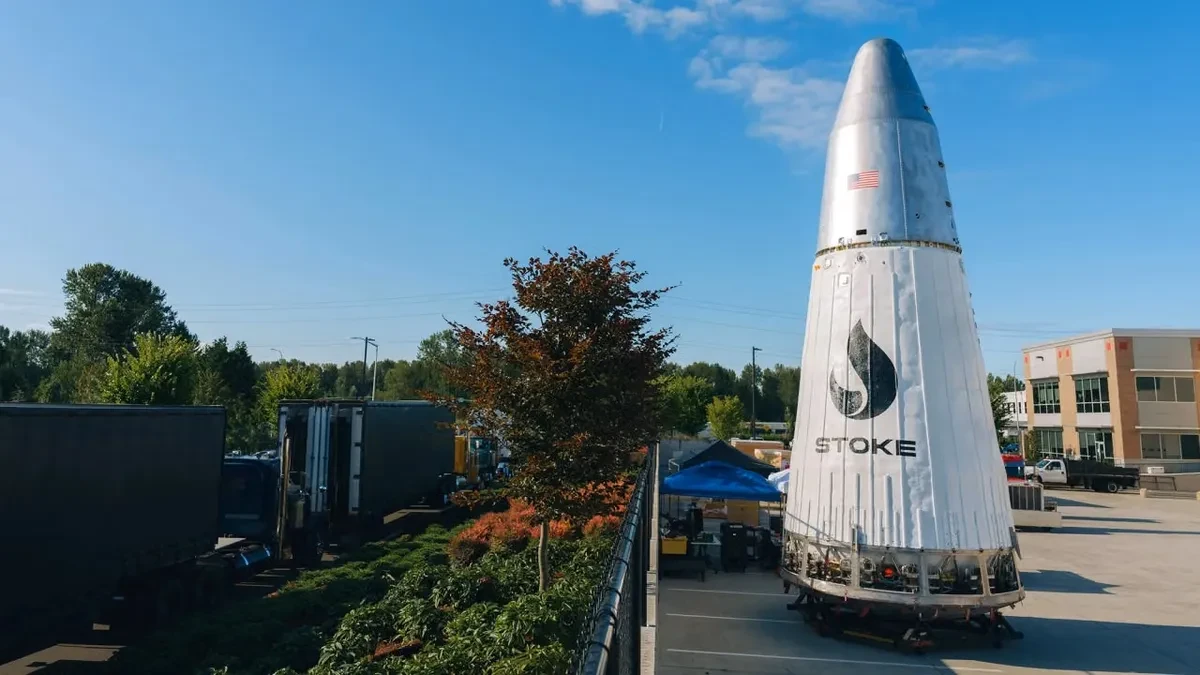
AstroForge is preparing a mission that could change the traditional principle of spacecraft control. At the beginning of 2027, its Autonomy-1 spacecraft is expected to head into space aboard Stoke Space’s first Nova Pathfinder rocket, and after separating from the launch vehicle, it will receive no commands from Earth. All decisions during the flight will be made by the onboard artificial intelligence system Solo.
If the mission goes according to plan, Autonomy-1 will become the first space mission to complete all of its assigned objectives after separating from the rocket without any intervention from operators on Earth, Space.com reports.
The spacecraft will make decisions on its own
Solo was developed to autonomously coordinate the spacecraft’s onboard functions. The system runs on top of existing deterministic software based on physical models and is designed to make real-time decisions by analyzing incoming data.
For AstroForge, this technology is especially important because of its plans to mine metals on asteroids. The company hopes to build an entire fleet of spacecraft, and continuously controlling each one from Earth would be difficult and expensive.
That is why, instead of sending large numbers of separate commands to the spacecraft, the company wants to move part of the decision-making directly onboard.
At first, the AI will operate in “shadow mode”
They do not plan to fully entrust control to Solo right away. The first test will be the DeepSpace-2 mission, which is scheduled to launch aboard SpaceX’s Falcon 9 rocket.
DeepSpace-2 is supposed to rendezvous with a near-Earth asteroid, but Solo will not control those operations. The system will operate in so-called “shadow mode”: it will analyze data from the spacecraft and make decisions independently, but its commands will not be executed.
This will allow the developers to compare the system’s actions with the decisions made by conventional software and assess how reliably Solo handles real space conditions.
The next stage is Autonomy-1. After separation from the rocket, AstroForge intends to eliminate all control from Earth. The spacecraft will continue sending telemetry and scientific data back to Earth, but communication will work only in one direction: specialists will be able to observe the spacecraft’s actions, but they will not be able to send it commands.
In addition to its own tasks, Solo will have to support the operation of the COMPASS scientific instrument — a compact multispectral photometer for studying the space environment, developed for NASA.
This will already be AstroForge’s third space mission
AstroForge was founded in 2022 with the goal of extracting resources beyond Earth. However, its previous missions have shown just how difficult the operation of even conventional spacecraft remains.
In April 2023, the company sent the experimental Brokkr-1 spacecraft into Earth orbit, where it planned to test technology for processing space-derived raw materials. The equipment could not be activated.
In February 2025, AstroForge launched the Odin spacecraft together with Intuitive Machines’ lunar mission. Odin was supposed to fly past a near-Earth asteroid and study it, but the company encountered communication problems and ultimately lost the spacecraft.
Against this backdrop, Autonomy-1 will be not only an experiment in autonomous control, but also an important test for the company itself.
The autonomy test will coincide with the first launch of a new rocket
The mission will be watched not only by asteroid-mining specialists. Autonomy-1 is set to head into space aboard Nova Pathfinder, Stoke Space’s first rocket.
Stoke Space is developing fully reusable rockets. If Nova Pathfinder really makes its first flight in early 2027, the launch will simultaneously serve as a test of two technologies: a new class of launch vehicles and fully autonomous spacecraft control.
For AstroForge, however, the ultimate goal is much broader than a single demonstration mission. If spacecraft can independently orient themselves in space, analyze conditions, and carry out tasks without constant control from Earth, such an approach could become especially in demand for future fleets of exploration and resource-extraction vehicles.