make preferable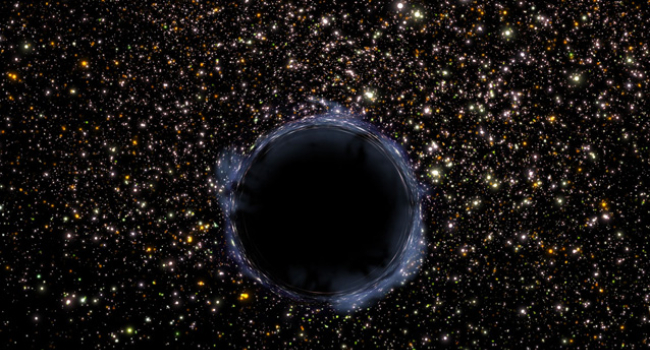
Current theories suggest that dark matter makes up to 85% of the entire Universe, but not a single particle of it has yet been detected. Australian scientists from the University of Sydney seem to be a little closer to detecting this mysterious substance. As The Conversation reports, the scientists reported the interim results of the international LUX-ZEPLIN (LZ) experiment, aimed at narrowing the search for dark matter particles.
The existence of dark matter is indirectly confirmed by such parameters as the rotation speed of galaxies and the residual glow of the Big Bang. The leading theory suggests that dark matter consists of “weakly interacting massive particles” (WIPs), which can exhibit observable gravitational effects and rarely interact with ordinary matter.
The LZ experiment, located in a former gold mine 1.5 km underground in South Dakota, USA, uses a tank with 7 tons of liquid xenon cooled to -98°C. If a dark matter particle hits a xenon nucleus, it will create a tiny flash of light that is detected by 494 light detectors.
The latest results from the experiment found no evidence of dark matter, but they did rule out a lot of irrelevant data, such as particles with a mass greater than 1.6 x 10^-26 kilograms (10 times heavier than a proton).
If LZ does not find evidence of dark matter, the scientists plan to use a new detector, almost 10 times larger, for further research.