make preferable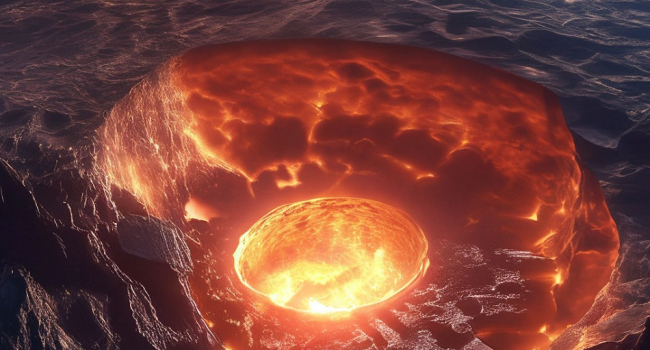
In the distant past, the Moon most likely had an ocean of magma. This was discovered by Indian scientists who, almost a year after the Chandrayaan-3 lunar mission, published the first results with an extended analysis of the data collected by the station and the Pragyan lunar rover.
The lunar rover's landing site, previously unexplored by scientists, is located in the polar regions of the Moon. Analysis of the regolith structure showed that it is similar to rocks from equatorial and mid-latitudes, which also speaks in favor of the hypothesis of the existence of a magmatic ocean on the Moon in the distant past.
In the 11 days before the onset of the lunar night, the rover covered 103 meters from the landing site. During this journey, it conducted 30 sessions of studying the lunar soil using the APXS X-ray spectrometer and the LIBS laser spectroscope. These studies allowed scientists to draw two important conclusions: firstly, there are clear traces of an ancient magma ocean on the Moon; secondly, the samples contain rocks from the deep interior of the Moon, which could only have happened as a result of a global catastrophe.
The data collected by Pragyan confirm that billions of years ago, the Moon had a global magma ocean. The abundance of anorthosite in the regolith indicates this, since these light minerals rise to the surface from the upper layers of the magma ocean. However, the presence of magnesium and its compounds in the surface rocks indicates that substances from the deep layers of the Moon were also thrown to the surface.
These substances reached the surface of the Moon as a result of an impact in the area of the largest crater in the Solar System - South Pole - Aitken, which has a diameter of 2,500 kilometers. This impact raised rocks from the deepest interior of the Moon and scattered them across its surface, which made their detection possible. Although India's lander and rover did not survive the lunar night, their explorations marked the first detailed study of the moon's south pole and polar regions, which are seen as potential sites for humanity's first base camp beyond Earth.