make preferable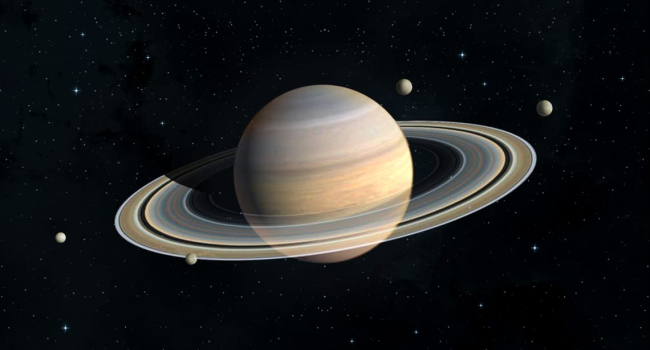
NASA has announced the winners of the latest round of its NIAC (NASA Innovative Advanced Concepts) programme. Eighteen bold technology concepts will receive a total of $3.2 million for preliminary development. Each project is funded for nine months and may receive up to $175,000. Among the ideas are launching ten thousand miniature probes into Saturn's rings, exploring subsurface lava tubes on the Moon, and building a system capable of resolving continents on exoplanets, reports Space.com.
Why NIAC exists
NIAC exists to support ideas that today seem almost like science fiction but could, in the long term, profoundly change space missions. These are not full‑scale NASA projects but early‑stage research "for the future." According to Greg Stover, director of Advanced Research and Technology, future space exploration requires not incremental improvements but genuine technological leaps—and it is exactly these leaps that the programme is meant to prepare.
Ten thousand "femto‑satellites" in Saturn's rings
One of the most striking projects was proposed by a team led by Michael Rubinstein from Northwestern University. The researchers want to send ten thousand ultra‑small spacecraft—each weighing less than 100 grams—to Saturn. These are so‑called femto‑satellites.
A single large mission like Cassini would risk being destroyed by collisions with ring particles. A distributed swarm of thousands of tiny probes can afford losses: even if a significant number of the spacecraft are destroyed, the remaining ones would continue to gather data directly from within the rings. This approach makes possible research that was previously considered too dangerous.
Robots in lunar caves
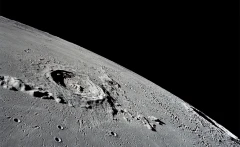
Another promising idea is the Lunar Underground eXplorer (LUX) from Stone Aerospace. The concept envisions sending hovering robots into lava tubes beneath the Sea of Tranquility on the Moon. These subterranean tunnels may extend for many kilometres and are of interest as natural radiation shelters for future lunar bases.
The robots would be connected to the surface by an ultra‑light fibre‑optic cable. Through it, a lander or rover would provide laser power and a communications link. In this way, the probes would be able to operate in complete darkness while remaining in contact with Earth.
Continents on distant planets
Paul Stancus from Brookhaven Science Associates proposes building a system of two space telescopes operating as an interferometer with starlight nulling. The instruments, separated by about a hundred kilometres, would suppress the bright light of the central star and isolate the reflected light from an exoplanet. Ideally, this would allow surface contrast to be distinguished and even continental outlines to be seen on worlds that are ten billion times fainter than their stars.
Other bold concepts
Among the remaining projects are technologies to protect spacecraft from Venus's extreme conditions, spacesuits with radioisotope heating for the Moon, and the idea of partially blocking solar radiation using cosmic dust. All these developments are still at their earliest stages, but it is precisely from such "seeds," according to acting NIAC director Phillip Williams, that the technologies of the future grow.
In brief
NASA has allocated $3.2 million for the development of 18 futuristic ideas under the NIAC programme. Among them are a swarm of 10,000 tiny probes to study Saturn's rings, hovering robots to map lunar lava tubes, and a telescope system capable of resolving continents on exoplanets. These are early‑stage studies that could, in the long term, significantly change approaches to lunar exploration, deep space, and the study of other worlds.