make preferable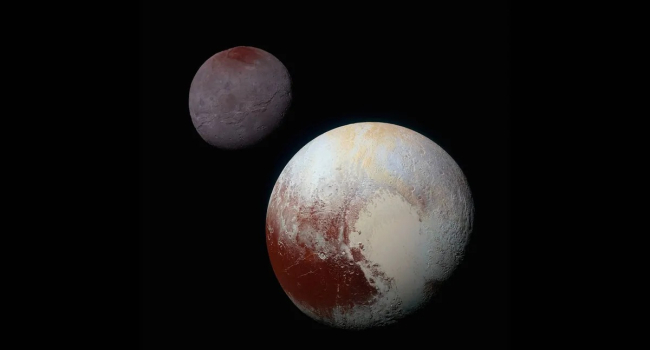
In August 2006, the International Astronomical Union (IAU) voted to strip Pluto of its full planet status. Twenty years have passed since then, and the debate has not subsided. Some scientists continue to insist that Pluto is a genuine planet. Others consider the 2006 classification entirely justified. Meanwhile, the broader public still perceives the decision as an unjust "demotion."
How Pluto lost its status
According to Space.com, by the early 2000s, objects similar to Pluto were already being found in the Kuiper Belt beyond Neptune. The decisive moment came with the discovery of Eris in 2005—a body of roughly the same size. If Eris was not a planet, why should Pluto remain one? At the 2006 IAU General Assembly, after lengthy debate, a definition was adopted: a planet must:
- be massive enough to assume a spherical shape,
- orbit the Sun,
- have "cleared" the neighbourhood around its orbit.
Pluto failed the third criterion. Its orbit intersects Neptune's, and it is surrounded by numerous similar Kuiper Belt objects. As a result, Pluto was reclassified as a dwarf planet and even assigned a minor planet number—134340—like an asteroid.
Scientific arguments for and against
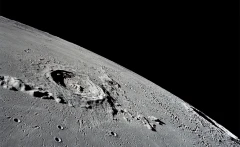
Planetary scientist Paul Byrne at Washington University in St. Louis is convinced that Pluto is a planet. Moreover, in his view, other large bodies—Ceres, Eris, Makemake, Haumea, and even large moons such as our own Moon—should also be considered planets.
Byrne's primary criterion is geophysical. If a body is large enough for gravity to make it round and for internal differentiation to have occurred, then it is capable of active geology: volcanism, atmospheres, glaciers, magnetic fields. It was precisely such processes that New Horizons found on Pluto in 2015—nitrogen glaciers, mountains, and a complex atmosphere.
Critics of the IAU's third criterion point out its logical loopholes. Neptune has not fully "cleared" its orbit either—Pluto travels alongside it. Earth still shares its orbital space with near‑Earth asteroids. And what about rogue planets that do not orbit a star at all?
On the other hand, if every rounded object were counted as a planet, the Solar System could contain hundreds. Some astronomers argue that Pluto would then simply be lost among a crowd of similar bodies. As a dwarf planet, it remains the "flagship" of an entire class of objects.
Why people still argue
The scientific debate is only part of the story. For many, Pluto is part of a worldview acquired in childhood: nine planets, mnemonics like "My Very Educated Mother Just Served Us Noodles," and solar system models in school classrooms. When the familiar scheme is suddenly changed, there is a feeling that something important has been taken away.
Psychologists note that people resist not so much the reclassification itself as the feeling that knowledge once thought to be immutable turned out to be provisional. Added to this is the "underdog effect": Pluto is small, distant, and "hard done by"—it is easy to see it as an underestimated hero.
Interestingly, its dwarf planet status has not made Pluto less popular. On the contrary, it has carved out its own cultural niche. At the Lowell Observatory, where Clyde Tombaugh discovered Pluto in 1930, the "I Heart Pluto" festival is still held.
Does it matter what we call it?
From a scientific perspective—yes. Classification helps compare objects and understand how the Solar System formed. But the label itself does not make Pluto more or less interesting. New Horizons revealed a complex, active world with geology, an atmosphere, and even hints of a subsurface ocean. That world will not go away, regardless of whether we call it a planet, a dwarf planet, or something else.
Perhaps the problem is not with Pluto but with the word "planet" itself. It was coined thousands of years ago, long before humans understood the nature of these "wandering stars." Today, we are discovering worlds of many different types—and the old concept simply cannot keep up with reality.
In brief
Twenty years ago, Pluto lost its planetary status because it had not "cleared" its orbital neighbourhood. Since then, the debate has not ceased: some scientists consider the IAU definition flawed and advocate a return to geophysical criteria; others see the logic in the current classification. At the same time, the public continues to perceive the 2006 decision as an unjust "demotion"—largely due to nostalgia and sympathy for the "underdog." Pluto itself remains one of the most fascinating objects in the Solar System, regardless of what we choose to call it.