make preferable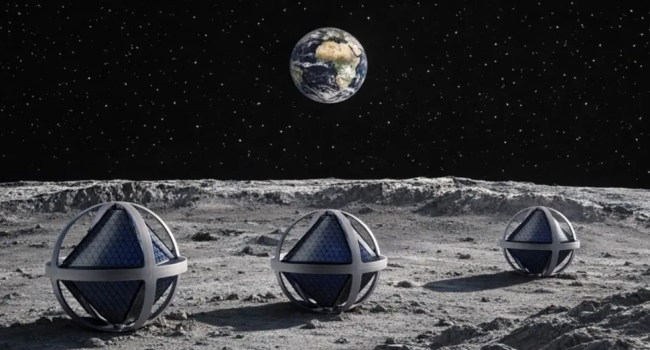
In 2029, China's Chang'e-8 mission may deliver the first African scientific experiment to the Moon's south pole. This refers to the Africa2Moon project and its key element — the BALLS (Bounced African Low Lunar Sphere) system.
What is BALLS
BALLS consists of three spherical probes that, after landing, would deploy on the lunar surface and form a small radio astronomy array. Each sphere contains low-frequency antennas capable of picking up radio signals below 20 MHz. Such frequencies are practically impossible to observe from Earth due to interference from the ionosphere and anthropogenic radio noise.
The far side of the Moon and the polar regions are considered some of the "quietest" places near Earth for radio astronomy. This is why scientists aim to place instruments there capable of "listening" to the oldest and most distant signals from the Universe.
How the system will work
After deployment, the three probes would be spaced out across the surface. The collected signals would be transmitted to the Chinese lander and from there to Earth. Each BALLS unit is a spherical gyroscopic structure with two triangular solar panels oriented in opposite directions.
The project is one of the international payloads for Chang'e-8 selected by the Chinese space agency in 2025.
The African team
The mission is led by the Foundation for Space Development Africa, in collaboration with the South African Radio Astronomy Observatory (SARAO), the South African National Space Agency, and a number of universities and institutes from South Africa, Kenya, Ghana, Botswana, and other African countries.
Carla Mitchell, mission director for Africa2Moon, noted that for many in Africa, space had until recently seemed like something out of reach. Now, African specialists are not only developing scientific instruments but also preparing them for an actual flight to the Moon.
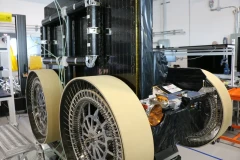
The functional and structural models have already been assembled and are to be handed over to the Chinese side for further testing.
Future plans
BALLS is only a technology demonstrator. The full Africa2Moon mission envisions deploying an array of 55 antennas on the far side of the Moon. This will likely require new collaboration with China. The design of future probes will differ: they will be larger and will deploy on the surface.
Significance of the project
Experts note that the project is being implemented on a relatively modest budget by enthusiasts and specialists. If the mission succeeds, it could become an important impetus for the development of space science and technology on the African continent.
In brief
In 2029, China's Chang'e-8 mission plans to deliver the first African scientific experiment — the BALLS system — to the Moon. Three spherical probes with low-frequency antennas would form a small radio astronomy array at the south pole. The Africa2Moon project is being carried out by specialists from South Africa and other African countries. This is an important step for the development of space research on the continent and a path toward a future larger array on the far side of the Moon.