make preferable
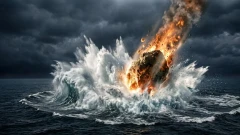
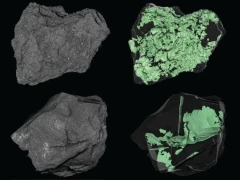
An international team of scientists led by Philippe Claeys from the Free University of Brussels has determined that the asteroid that caused the mass extinction 66 million years ago belonged to the rarest type of carbonaceous chondrites — CO meteorites. They account for less than 5% of all meteorite finds on Earth. The work was published in the journal Science Advances.
How the asteroid's type was determined
The researchers analyzed the isotopic composition of nickel in samples from five geological sections of the Cretaceous–Paleogene boundary (K–Pg) located on different continents. The isotopic "fingerprints" proved to be characteristic of CO chondrites — a group of meteorites that formed in the outer Solar System at high temperatures. They are distinguished by very low sulfur content.
Why this changes the picture of the catastrophe
Previously, acid rain caused by the release of enormous amounts of sulfur upon impact was considered one of the key factors in the dinosaurs' extinction. However, if the asteroid was sulfur-poor, this mechanism could not have played a decisive role.
According to the authors, the main "killer" was fine dust. Fine material from the vaporized asteroid and ejected rocks spread throughout the atmosphere, blocked sunlight for months to years, and caused a sharp cooling — a "nuclear winter" of the Cretaceous period.
Unusual origin
The finding also points to the rare nature of the object: a body that formed in the cold outer regions of the protoplanetary disk, rich in organics and volatiles, somehow found its way onto a collision trajectory with Earth. Such an event is itself extremely rare.
In brief
Scientists have determined that the asteroid that killed the dinosaurs 66 million years ago belonged to the rare CO type of carbonaceous chondrites with very low sulfur content. This calls into question the hypothesis that acid rain was the main cause of the extinction. According to the authors, the primary factor was dust, which caused global cooling. The work was published in the journal Science Advances.