make preferable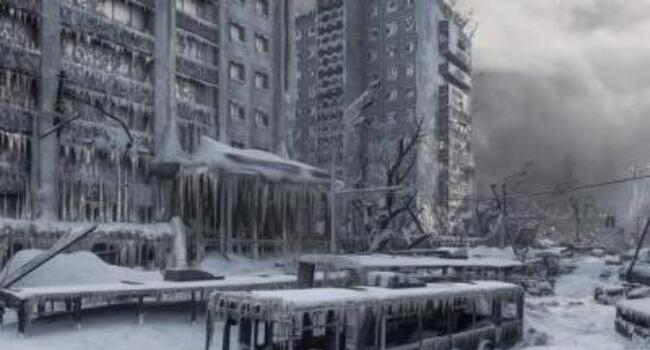
A full-scale nuclear war could destroy modern civilization, but it will not turn Earth into a dead planet. Life will most likely survive, but it will go through a severe reduction in species population and a subsequent restructuring of ecosystems. The main factor after a nuclear conflict will not only be radiation, but also nuclear winter — a sharp cooling caused by huge amounts of soot entering the atmosphere.
Nuclear war will be a catastrophe for civilization, but not for the entire biosphere
Climate models developed by American researchers Alan Robock of Rutgers University and Owen Toon of the University of Colorado show that after massive fires resulting from nuclear explosions, soot particles could rise into the stratosphere and block sunlight.
In the most severe scenarios, this effect could persist for anywhere from several years to 10–15 years. Surface temperatures on the planet will drop, photosynthesis will sharply decline, agriculture will be virtually paralyzed, and complex terrestrial ecosystems will begin to collapse.
The history of Earth shows that even the largest catastrophes did not destroy all life. After mass extinctions — such as the Permian about 252 million years ago or the Cretaceous, which led to the disappearance of the dinosaurs — the biosphere recovered thanks to organisms capable of adapting quickly.
According to planetary scientist Dirk Schulze-Makuch from the Technical University of Berlin, who analyzed possible survival scenarios following a global nuclear war, organisms with high resilience to extreme conditions will have the best chances.
Not the strongest will survive, but the most adaptable
One of the main candidates for survival is the bacterium Deinococcus radiodurans. This microorganism can withstand doses of radiation thousands of times higher than those lethal to humans. Its ability to rapidly repair damaged DNA has made it one of the most studied extremophiles in the world.
Another group of potential survivors is fungi. In the Chernobyl Exclusion Zone, species were discovered that are capable of using ionizing radiation as an additional source of energy. These so-called radiotrophic fungi could gain an advantage in conditions of elevated background radiation.
Insects, nematodes, tardigrades, and rotifers are also listed among the resilient groups. They share a small size, a fast reproduction cycle, and the ability to endure adverse conditions.
Scientists separately highlight deep-sea ecosystems. Organisms near hydrothermal vents on the ocean floor exist without sunlight, utilizing energy from chemical reactions inside the Earth, so a nuclear winter will affect them significantly less.
The first years after the catastrophe: a world of simple organisms
In the first years following a nuclear war, ecosystems will become significantly simpler. Complex food chains will be replaced by communities of bacteria, fungi, and decomposers. When the concentration of soot in the atmosphere begins to decrease and sunlight gradually returns, the recovery of vegetation will begin. According to Robock and Toon's models, the most severe consequences of nuclear winter could persist for about a decade, after which climate conditions will begin to gradually stabilize.
The first to inhabit the areas will be so-called pioneer species — mosses, lichens, grasses, and plants capable of spreading rapidly via seeds and spores. However, restoring full biodiversity will take much longer. Large animals and complex ecosystems will recover slowly, and many species may disappear forever.
Over hundreds and thousands of years, new ecosystems will form on the planet, but they will no longer resemble modern ones. The vacant ecological niches will be occupied by smaller and faster-reproducing organisms.
What the new world might look like
Evolution after such a catastrophe will follow the same principles that scientists have observed after other mass extinctions: advantages go to species capable of reproducing quickly, enduring stress, and utilizing diverse food sources. In the new world, the role of microorganisms and fungi will likely increase, while smaller animals will get more opportunities to occupy niches that previously belonged to larger species.
At the same time, an elevated level of radiation does not mean the emergence of "superorganisms." As Schulze-Makuch notes, most mutations are harmful, and only a small fraction of changes can confer an evolutionary advantage.
The scientific consensus is that a nuclear war would primarily be a catastrophe for human civilization. Earth's biosphere has already lived through periods when the majority of existing species vanished, and each time life found new paths of development. But recovery from such a crisis will be measured not in years, but in millennia and millions of years.
If humanity disappears, Earth will continue to exist. However, the next chapter in the planet's history may belong not to the most intelligent beings, but to those best adapted to life in extreme conditions.