make preferable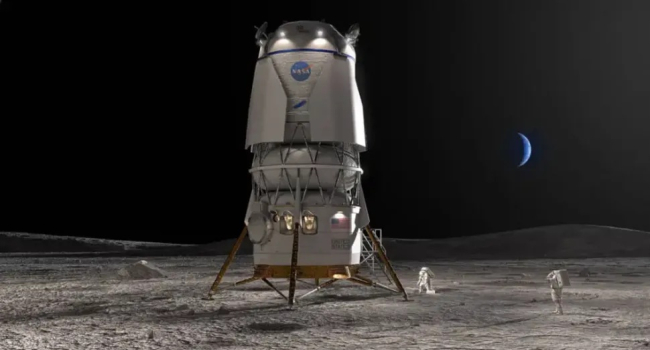
NASA's plans to return humans to the Moon under the Artemis program could have unexpected consequences. A new study warns that lander exhaust could contaminate ancient lunar ice, which may hold molecules that preceded the emergence of life on Earth.
Where the "traces" of life's origin are hidden
As Space.com reports, in the dark craters near the Moon's poles, which are never illuminated by the Sun, ancient ice has been preserved. It contains material from asteroids and comets that bombarded the Moon billions of years ago. It is precisely in this ice that so-called prebiotic organic molecules may be found — those same compounds that may have served as the "building blocks" for the first life on Earth.
One of the study's authors noted that organic molecules are known to exist in the Solar System, for example in asteroids, but how they began to perform specific functions characteristic of biological matter is a question that still remains to be answered.
Why landings are dangerous
When lunar modules land in the south polar region (where Artemis plans to set down), large amounts of methane — the main organic component of rocket exhaust — are released. Computer modeling has shown that methane spreads very quickly across the lunar surface due to the absence of an atmosphere.
In just one lunar week (roughly seven Earth months), more than half of the methane could settle in the cold polar regions, precisely where the ancient ice is stored. This could permanently contaminate unique samples that remained untouched for billions of years.
Is there a solution?
The researchers suggest that choosing colder landing sites could reduce the spread of contamination. However, additional modeling and consideration of other substances that may be released during landings are needed for accurate risk assessment.
The scientists emphasize that the Moon is a precious scientific resource that should be protected just like Antarctica or national parks on Earth.
In brief
Crewed landings on the Moon, especially in the south polar region, could contaminate ancient lunar ice with methane from rocket exhaust. This ice may contain prebiotic organic molecules — possible "building blocks" of life on Earth. New research shows that contamination spreads very quickly and could destroy unique scientific samples. Scientists urge careful planning of future missions to preserve the Moon's scientific value. The work was published in the journal American Geophysical Union.