make preferable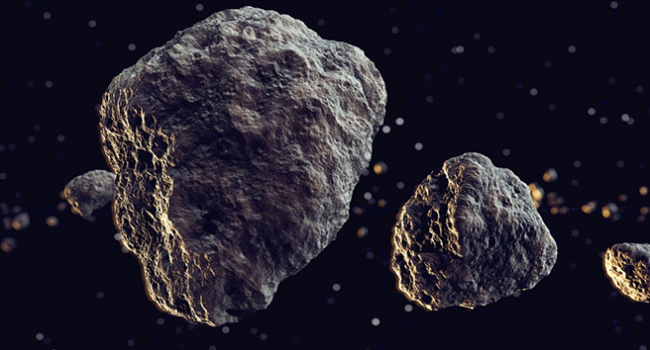
Scientists from the Southwest Research Institute (SwRI) have presented a new model according to which large asteroid impacts on early Earth could have created ideal conditions for the emergence of life. The work was published in the journal AGU Advances.
How asteroids helped life
Hydrothermal systems — networks of cracks in the Earth's crust through which hot, mineral-rich water circulates — have long been considered one of the most likely locations for the emergence of the first organic molecules and primitive life forms.
Using computer modeling, the study's authors showed that a large asteroid impact could have triggered powerful hydrothermal activity. According to their calculations, a single such impact launched processes roughly 100 times more intense than the modern activity of Yellowstone National Park — the largest geothermal system on Earth, with its geysers and hot springs.
When this happened
Modeling showed that about 4.3 billion years ago, the upper eight kilometers of the Earth's crust remained highly fractured and permeable to water. This state persisted until about 3.5 billion years ago — precisely the period to which the oldest reliable traces of life on our planet date.
Rethinking the role of asteroids
Traditionally, asteroid bombardments are associated with mass extinctions, as in the case of the dinosaurs. However, in the very earliest stages of Earth's history, these same cosmic impacts, according to the scientists, could have played a constructive role — creating a favorable chemical environment for the emergence of life.
In brief
Scientists from SwRI have proposed a new hypothesis: large asteroid impacts on early Earth could have triggered massive hydrothermal systems in which the first organic molecules could have originated. Modeling showed that a single such impact generated activity 100 times greater than modern Yellowstone. This explains how life could have appeared around 3.5–4.3 billion years ago. The work was published in the journal AGU Advances.