make preferable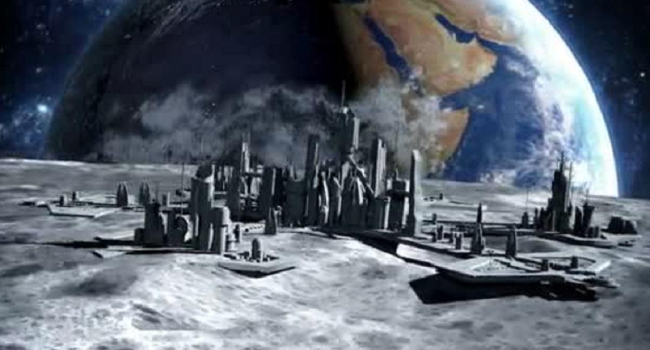
Humanity is preparing to head back to the Moon, but this time it is no longer about a few days of exploration. The main goal of the Artemis program is to create a permanent base that could eventually transform into a real extraterrestrial settlement. To achieve this, scientists will have to solve dozens of challenges that humans have never faced before: building roads where there is no atmosphere, protecting housing from cosmic radiation, providing the colony with water and electricity, and learning to build structures from... moon dust.
The south pole instead of the usual plains
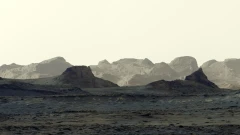
All crewed expeditions of the Apollo era landed in relatively safe areas of the equatorial part of the Moon. The new program chooses a much more difficult target — the south pole. This region is considered one of the most promising locations for a future base. It features huge craters, mountain ranges, and areas that have not been illuminated by sunlight for billions of years. It is in these permanently shadowed areas that scientists believe significant reserves of water ice are hidden — a key resource for the life of future colonists. However, the attractiveness of this area simultaneously makes it one of the most dangerous. The complex terrain, deep shadows, and extreme conditions will require building a fully functional infrastructure practically from scratch.
The main enemy is not the cold at all
One of the most serious problems for the future base will not be the temperature at all, but moon dust. It consists of tiny, sharp particles resembling crushed glass. During the Apollo missions, this dust damaged spacesuits, scratched the protective visors of helmets, and caused equipment failures. Due to the lack of atmosphere and weak gravity, the particles can scatter for hundreds of meters after each spacecraft landing. That is why the first construction objects on the Moon might not be living modules at all, but roads and landing pads. In the short term, the use of special polymer compounds is being considered, similar to those used by the military to reinforce unpaved roads and helipads. However, the constant delivery of such materials from Earth is too expensive and, moreover, pollutes the lunar surface with microplastics. Therefore, European specialists propose a more unusual solution — literally melting the top layer of lunar soil, turning it into a durable glass-like coating. For this, either powerful lasers or huge Fresnel lenses that concentrate sunlight can be used. Admittedly, the speed of construction remains low for now: creating a single landing pad with an area of about 100 square meters could take nearly four months.
Motorhomes instead of cars
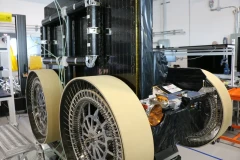
Astronauts will not be moving around the future base in ordinary rovers. Japanese engineers, together with Toyota, are developing a pressurized rover called Lunar Cruiser, which resembles a motorhome more than a car. The vehicle will be able to transport two people, providing them with autonomous operation for a month without the need to constantly wear spacesuits. Such vehicles will become the main transport both within the base and during long research expeditions.
The first lunar home is already designed
NASA has already presented the design for the first residential complex, the Foundation Surface Habitat. The three-story structure is designed for four astronauts and will be able to support their work for about a month. The lower level will house an airlock, spacesuits, and a scientific laboratory for studying lunar rocks.
The second floor will be occupied by facilities for exercise, hygiene, and biological experiments. The top level will become a living area with cabins, a kitchen, a medical block, and workstations. At the same time, the astronauts themselves will also become subjects of scientific research — scientists intend to study how a prolonged stay on the Moon affects the human body.
Houses made of moon dust
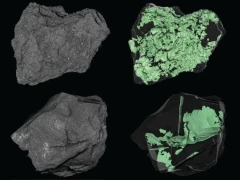
Temporary living modules are only the first stage. To create a permanent base, reliable protection from cosmic radiation, micrometeorites, and sharp temperature fluctuations will be required. The most promising technology is considered to be the production of building blocks directly from lunar regolith. In essence, scientists suggest "baking" moon dust, turning it into bricks that will cover the living modules. Similar developments are already underway in China.
Researchers have manufactured several types of experimental bricks from simulated lunar soil and sent the samples to the outer surface of the Tiangong space station, where they are undergoing multi-year testing in open space conditions. There are also more futuristic projects. One of them involves creating giant glass domes by a kind of "blowing" of molten lunar soil. Due to the lack of atmosphere and low gravity, such structures could theoretically reach enormous sizes.
Nuclear power is indispensable
Power supply will be one of the most difficult challenges for the future colony. On the Moon, day and night each last for about two weeks. While the Sun is shining, solar panels work efficiently, but then an equally long period of complete darkness sets in. The problem is particularly acute at the south pole, where many promising areas with ice reserves are never illuminated by the Sun at all.
That is why NASA is betting on compact nuclear reactors. The Fission Surface Power project involves creating a small nuclear power plant weighing less than six tons, capable of providing energy to the first lunar base. One of the participants in the development is Rolls-Royce, which has many years of experience in creating reactors for British nuclear submarines. It is assumed that one micro-reactor will be able to produce up to 100 kilowatts of electricity — enough to power a small settlement. In the future, several such units will be able to form a complete energy system for the future lunar city.
The first step to outer solar system exploration
The creation of a permanent base on the Moon is seen not as an end in itself, but as a necessary stage in the exploration of deep space. It is here that humanity will first attempt to learn to live beyond Earth, using local resources, building its own infrastructure, and creating technologies that could later be useful for flights to Mars and other planets.
If this project is successfully realized, the first lunar base will become not just another scientific station, but a true staging ground for a future space civilization.