make preferable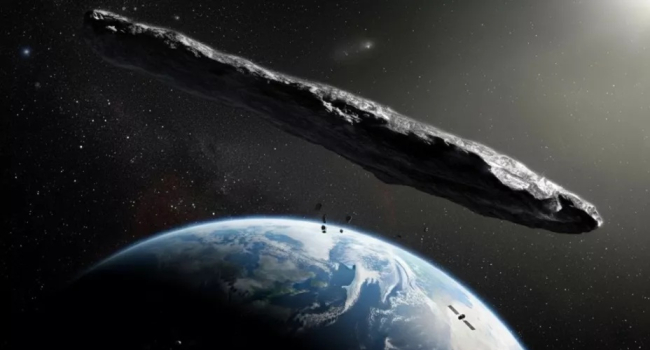
An international group of astronomers has obtained new data on the origin of interstellar comet 3I/ATLAS, the brightest object ever to enter the Solar System from interstellar space. Analysis of its chemical composition showed that the comet likely formed near an ancient star long before the Sun appeared. Scientists estimate that the age of this cosmic wanderer could be more than twice the age of our star. The results of the study are published in the journal Nature Astronomy.
A cosmic "guest" from another star system
Comet 3I/ATLAS became only the third interstellar object discovered by astronomers. Before it, scientists had observed only the mysterious asteroid ʻOumuamua and comet 2I/Borisov. However, it was 3I/ATLAS that turned out to be particularly valuable to science. Due to its unusually high brightness, it remained within the Solar System long enough to allow researchers to study its composition in detail. Previous interstellar objects provided almost no such opportunity: no gas envelope could be detected on ʻOumuamua, and Borisov turned out to be too dim for such a detailed analysis.
A cosmic time capsule
According to the study's leader, Cyrielle Opitom from the University of Edinburgh, interstellar comets can be compared to real "fossils" from the era of planet formation. "They are a kind of time capsule that has preserved information about the processes that took place around other stars billions of years ago. They come to us from the depths of the Galaxy, providing a rare opportunity to study the history of completely different planetary systems," the researchers note.
What the atoms told
To study the comet, scientists used the European Southern Observatory's Very Large Telescope (VLT), located in the Atacama Desert in Chile. The main task was to measure the isotopic composition of carbon and nitrogen—that is, the ratio of different types of atoms of the same chemical element. Such indicators are considered a kind of "genetic passport" for a celestial body. They are formed at the birth of a comet and practically do not change during billions of years of travel in space. It turned out that the isotope ratio of 3I/ATLAS noticeably differs from what is observed in all known comets of the Solar System. In addition, an independent study using the James Webb Space Telescope revealed an increased content of deuterium, the so-called heavy hydrogen. These results confirm the conclusions of European scientists.
Older than our Sun
The data obtained indicate that the comet formed on the outskirts of an ancient star system around a so-called low-metallicity star. Astronomers call "metals" all chemical elements heavier than helium. In the young Universe, there were significantly fewer such elements, so ancient stars contain them in very small amounts. This is exactly what suggests that 3I/ATLAS originated near a star that appeared much earlier than the Sun.