make preferable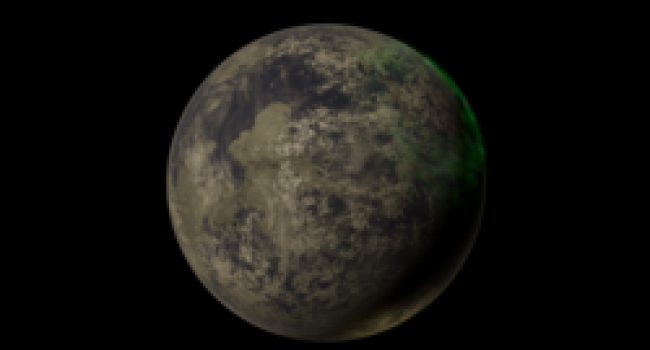
An international team of astronomers has discovered a new exoplanet that may be capable of supporting life. The object, designated GJ 3378b, is located in the constellation Camelopardalis and orbits a dim red dwarf.
Why this discovery matters
The planet is located just 25 light-years away — a near "neighbor" by cosmic standards. As Paul Robertson from the University of California, Irvine noted, this is one of our closest cosmic neighbors. He added that 25 light-years sounds far, but the Milky Way is about 100,000 light-years in diameter, so in that sense, it is literally next door.
What we know about the planet
Initially, GJ 3378b was thought to have a mass of about 5.26 Earth masses (a mini-Neptune). However, new observations with two different telescopes showed that the planet's actual mass is only 2.3 Earth masses. This places it in the category of super-Earths — rocky worlds.
The planet's orbital period around its star is 21 days (not 25, as previously thought). This places GJ 3378b in the habitable zone — the region where, given an atmosphere, liquid water could exist on the surface. The planet receives about 90% of the radiation that Earth receives from the Sun.
The main problem — radiation from the red dwarf
Red dwarfs are known for powerful flares and strong stellar winds that can strip away planetary atmospheres. Whether GJ 3378b has retained its atmosphere is still unknown. Without it, potential habitability is impossible to discuss.
Unfortunately, the planet does not transit its star, so its atmosphere cannot be studied with the James Webb Space Telescope at present. Scientists will have to wait for the launch of the Habitable Worlds Observatory in the 2040s.
Prospects
Despite all the challenges, astronomers remain optimistic. The planet lies on the edge of the zone where stellar radiation is particularly destructive. If the atmosphere has survived, GJ 3378b could become one of the most interesting candidates for biosignature searches.
Michael Endl from the University of Texas at Austin noted that the ultimate goal is biosignatures, adding that we really want to know whether we are alone in the Universe.
The study was published on June 30 in The Astrophysical Journal.
In brief
Astronomers have discovered a potentially habitable super-Earth, GJ 3378b, just 25 light-years from us. The planet lies in the habitable zone of a red dwarf, receives approximately 90% of Earth's radiation, and has a mass of 2.3 Earth masses. The key question is whether it has retained its atmosphere under the influence of powerful stellar wind. This can only be answered in the 2040s with new space telescopes. This is one of the most interesting discoveries in recent years in the search for habitable worlds.