make preferable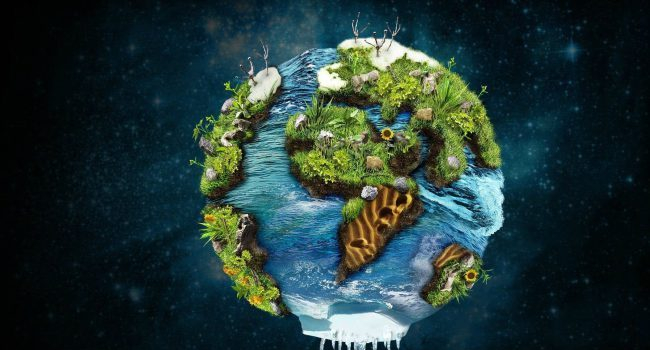
According to a new study published in the journal JGR Atmospheres, complex plant life on our planet is capable of existing significantly longer than previously thought, Live Science reports.
Scientists from the Blue Marble Space Institute of Science, led by Jacob Haqq-Misra, used 29 complex climate models and concluded that the photosynthetic biosphere (all plants and the foundation of most food chains) could persist for about another 1.8 billion years. This is nearly 18 times longer than some previous estimates suggested.
Why does the Sun threaten life?
The Sun is gradually getting brighter. Over 4.5 billion years, it has already increased its luminosity by about a third. Over time, the star will continue to heat up, which will lead to major changes on Earth.
The main problem is photosynthesis. Plants need carbon dioxide (CO₂) and suitable temperatures to live. If temperatures get too high, the photosynthetic apparatus stops working. Furthermore, as the Sun heats up, Earth will more actively lock CO₂ away from the atmosphere into rocks, leading to plant "starvation."
How the study was conducted
The scientists considered two extreme scenarios: one where Earth becomes too hot but CO₂ still remains, and another where CO₂ almost disappears but the temperature remains relatively stable.
They then studied intermediate options, including plants with a specific type of photosynthesis (CAM plants—succulents, orchids, and some marine plants) that are capable of surviving at very low levels of carbon dioxide.
The results showed that complex plant life could hold out significantly longer than previously thought—right up to the point when Earth begins to lose its oceans (in about 2 billion years).
What other scientists say
Robert Graham from the University of Chicago, who was not involved in the study, noted that the new work utilizes more sophisticated three-dimensional climate models and shows greater resilience of Earth's biosphere to the gradual warming of the Sun.
Andrew Rushby from Birkbeck, University of London, emphasized that the results are "broad estimates." No one can accurately predict exactly how life will evolve over billions of years and what adaptations might emerge.
"The Earth system is remarkably resilient, and we are part of something that could have a much longer future," noted study co-author Jacob Haqq-Misra.
These findings are important not only for understanding the future of our planet but also for assessing the potential habitability of other worlds. The scientists plan to adapt the models to simulate the atmospheres of other planets.
Thus, complex life on Earth still has a very long time left—nearly twice as long as the age of the Solar System to date.