make preferable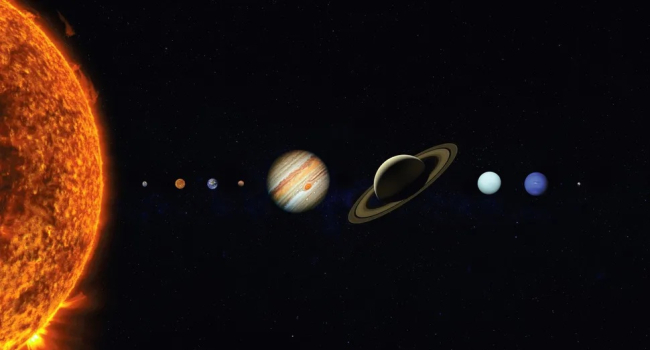
In the year the United States declared independence, astronomers knew of only six planets in the Solar System. Today, there are officially eight. But the story of this count turned out to be far more complex and interesting than it might seem at first glance.
How the number of planets changed
In 1776, the list included Mercury, Venus, Earth, Mars, Jupiter, and Saturn. In 1781, William Herschel discovered Uranus, increasing the number of planets to seven. In 1801, Ceres was discovered, and soon after, three similar objects. For a short time, astronomers considered them planets, and the total number grew to eleven. However, they were later reclassified as a new class — asteroids — and the planet count dropped back to seven.
In 1846, the discovery of Neptune brought the count back to eight. And in 1930, Clyde Tombaugh discovered Pluto, making the nine-planet Solar System familiar to many. This continued until 2006.
Why Pluto "lost" its planetary status
In 2006, the International Astronomical Union adopted an official definition of a planet. To be considered a planet, an object must:
- Orbit the Sun
- Have sufficient mass to assume a nearly spherical shape
- Have "cleared" its orbit of other objects
Pluto met the first two criteria but not the third. It was reclassified as a dwarf planet. Thus, the Solar System officially returned to eight planets.
The debate continues
The debate over Pluto's status continues to this day. Some scientists argue for a geophysical definition (based on the object's physical properties), while others advocate for a dynamic one (taking into account influence on the orbital environment). The 2015 New Horizons flyby showed that Pluto is a complex and geologically active world, which only fueled the discussion.
Recently, even NASA Administrator Jared Isaacman spoke out in favor of restoring Pluto to the planet list.
What this says about science
The history of how the planet count has changed is an excellent illustration of how science works, according to historian Kevin Schindler of the Lowell Observatory. He noted that scientists discover something new, study it, and classify it. As knowledge accumulates, understanding changes, and sometimes objects have to be reclassified.
The discovery of the Kuiper Belt and thousands of trans-Neptunian objects showed that Pluto is not a unique body but one representative of a vast population of icy worlds on the outskirts of the Solar System.
The future of the count
Astronomer Kyler Kuehn notes that scientific definitions change as knowledge accumulates. Perhaps future discoveries in the far reaches of the Solar System or beyond will once again force us to reconsider what we call a planet.
In brief
Since 1776, the number of known planets in the Solar System has fluctuated from 6 to 11 and back. Today, there are officially eight. The discoveries of Uranus, Neptune, Pluto, and Pluto's subsequent reclassification as a dwarf planet in 2006 reflect the evolution of our knowledge. The debate over Pluto's status continues, and the history of how the planet count has changed clearly demonstrates how science works: new discoveries force us to revise old ideas. Perhaps future changes to this list await us.