make preferable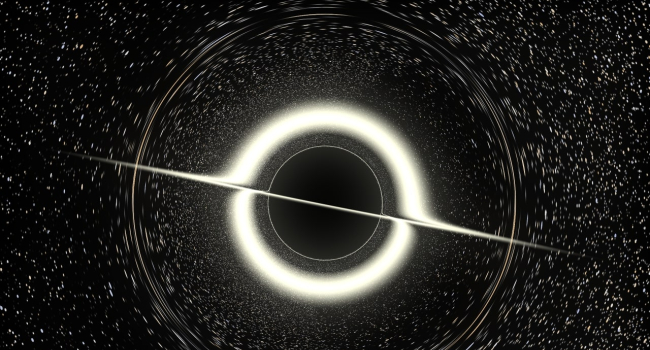
Astronomers have applied a technique called reverberation mapping and obtained the first evidence that dense clouds and clumps of dark matter may exist around supermassive black holes, including Sagittarius A* at the center of the Milky Way. This discovery could help better understand the nature of the Universe's most mysterious substance.
How the method works
The technique of reverberation mapping is based on the fact that matter falling into a black hole causes a burst of energy in the accretion disk. This pulse of light travels outward and reaches gas at the outskirts of the black hole's vicinity. The gas absorbs the light and also "flashes," creating an echo.
Knowing the speed of light, astronomers can use the time delay between pulses to determine the distance from the black hole to the surrounding gas. This method has traditionally been used to estimate the mass of black holes, but it has now been applied to search for dark matter.
Results of the study
A team led by Mayank Sharma from Virginia Tech studied 14 galaxies. In five cases, they found that the mass surrounding the central black hole increases with distance in a way that cannot be explained by visible matter alone.
Sharma noted that these galaxies definitely show a hint of additional material that cannot be accounted for solely by the supermassive black hole.
Significance of the discovery
Although the results are preliminary and do not constitute definitive proof, they open up a promising path for further research. If the hypothesis is confirmed, it would significantly expand our understanding of dark matter's role in galaxy centers.
In brief
Astronomers using reverberation mapping have found hints of dark matter clumps around supermassive black holes. In five of the 14 galaxies studied, the mass surrounding the black hole increases with distance faster than can be explained by visible matter alone. This is the first indication that dark matter may concentrate in the vicinity of the Universe's most massive objects. The study was published in the journal Physical Review D.