make preferable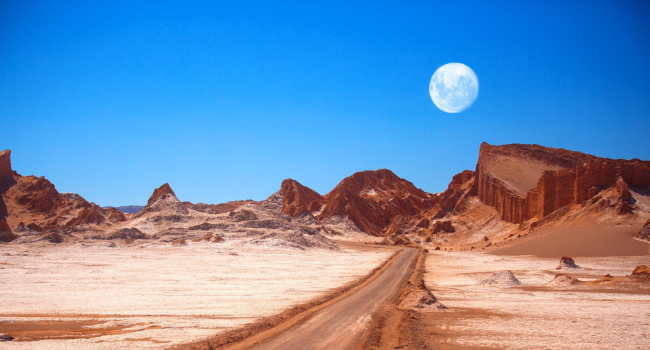
Scientists from the University of Cologne have presented new data that substantially change our understanding of the age and origin of the Atacama Desert — the driest place on the planet outside the polar regions. According to the study, extremely arid conditions in this area may have emerged tens of millions of years earlier than previously assumed.
The results of the work were published in the journal Nature Communications.
Revising the conventional theory
For a long time, it was believed that the Atacama became hyperarid about 23 million years ago. The main causes were thought to be two geological events: the uplift of the Andes mountain range, which blocked the influx of moist air from the east, and the formation of the cold Peru (Humboldt) Current off the coast of South America, which sharply reduced precipitation.
However, a new analysis has forced scientists to abandon this version.
Cosmic ray method
The researchers studied quartz pebbles from the central part of the desert. They measured the concentration of the rare isotope neon-21, which accumulates in rocks under the influence of cosmic rays. The longer a stone lies on the surface without being broken down by water, wind, or landslides, the higher the concentration of this isotope.
The results were unexpected: many of the samples had been on the surface for between 20 and 40 million years. One of the stones showed an age of nearly 62 million years.
New understanding of the origin
Such data indicate that extremely arid conditions existed in the Atacama as early as the Eocene — more than 34 million years ago. This is significantly earlier than the formation of the modern Andes and the cold ocean current.
The study's authors link the desert's emergence to the global cooling of the Earth that began about 50 million years ago. The planet's temperature change led to a reorganization of atmospheric circulation and a redistribution of precipitation, which contributed to the expansion of arid zones worldwide.
Significance of the discovery
If the findings are confirmed, the Atacama may be considered one of the oldest deserts on Earth. Its formation would be connected not so much with local geological processes as with global climate change.
Furthermore, the region acquires even greater scientific value as a natural analog of Mars. The extreme drought, minimal precipitation, and unique conditions make the Atacama an ideal place for studying how life (or its absence) can exist in an extremely harsh environment.
In brief
Scientists have determined that the Atacama Desert — the driest place on Earth — may have formed tens of millions of years earlier than previously believed. An analysis of neon-21 isotope content in quartz pebbles showed that some areas have been under hyperarid conditions for over 60 million years. This is linked to the global cooling of the planet during the Eocene. The discovery changes conventional understanding of the Atacama's origins and underscores its value as a natural laboratory for studying extreme ecosystems.