make preferable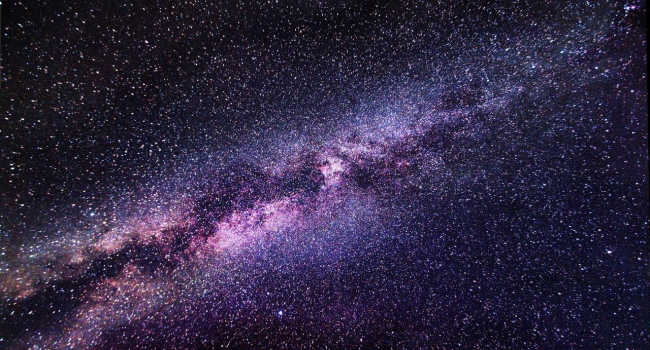
An international group of astronomers from the University of Hamburg has proposed an unexpected solution to one of the long-standing mysteries of galactic astronomy. A significant portion of the "missing" ordinary (baryonic) matter in our galaxy may be hidden in the form of a vast invisible swarm of interstellar objects similar to the recently discovered comet 3I/ATLAS.
A preprint of the study has been published on the arXiv server.
From three objects to trillions
By 2026, astronomers had confirmed the existence of only three interstellar objects that have visited the Solar System:
- 1I/'Oumuamua
- 2I/Borisov
- 3I/ATLAS — the largest of them (radius between 0.16 and 2.8 km)
The age of 3I/ATLAS is estimated at 11 billion years — twice as old as the Solar System.
The scientists performed calculations, extrapolating the density of such objects in the vicinity of the Sun to the entire galaxy. The result was impressive: if the assumption is correct, the total mass of these "wanderers" could range from 13% to 45% of the matter previously attributed to dark matter.
"If the hypothesis is correct, the Milky Way contains trillions of comet-like bodies freely moving between star systems," the authors of the study note.
Why this matters
Such a quantity of interstellar objects could significantly change our understanding of the composition and evolution of the galaxy. Furthermore, these bodies could act as "cosmic carriers" of organic molecules, facilitating the spread of precursors to life between planetary systems.
How to test the hypothesis
The main limitation of the current work is the extremely small amount of observational data (only three objects). The final test of the hypothesis is expected to come from the under-construction Vera Rubin Telescope, which will begin regular observations in the coming years. According to forecasts, it will detect dozens of similar interstellar objects annually.
In brief
Astronomers have suggested that up to 45% of the Milky Way's "missing" ordinary matter may be in the form of a vast swarm of interstellar comets and asteroids similar to 3I/ATLAS. If the hypothesis is confirmed, it would represent an important step toward understanding the true composition of our galaxy and the processes of organic material distribution in space. Large-scale verification is expected from the Vera Rubin Telescope.