make preferable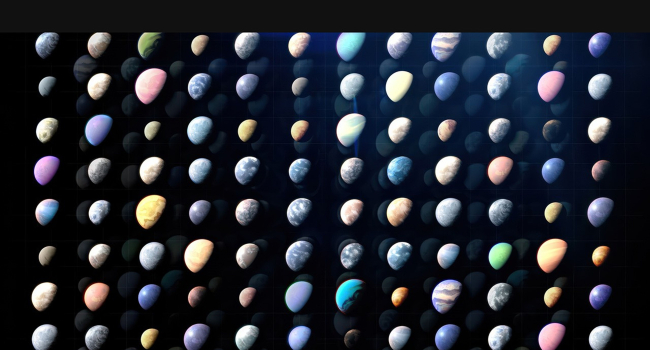
Astronomers using data from NASA’s Transiting Exoplanet Survey Satellite (TESS) and machine learning techniques have identified 10,091 potential exoplanets — one of the largest batches of planet candidates discovered in recent years.
The results were published in The Astrophysical Journal and could dramatically expand the number of known worlds beyond the Solar System.
How Researchers Found So Many New Worlds
Since launching in 2018, TESS has searched for exoplanets using the transit method. When a planet passes in front of its host star, the star briefly dims by a tiny amount. By tracking these repeating dips in brightness, astronomers can detect potential planets.
Traditionally, TESS has focused mainly on relatively bright stars, where transit signals are easier to identify. But in the new study, researchers deliberately shifted attention toward much fainter targets.
The team analyzed first-year TESS observations covering roughly 83 million stars — stars that were, on average, about 16 times dimmer than those typically studied in previous surveys.
Using machine learning algorithms to process the enormous dataset, scientists identified 10,091 previously unknown signals that resemble planetary transits.
For comparison, NASA’s confirmed exoplanet catalog currently contains just over 6,200 verified planets. If even a fraction of the new candidates are confirmed, the total number could increase dramatically.
The First Confirmed Planet
Researchers have already confirmed one of the newly identified candidates: TIC 183374187 b.
The planet appears to be a classic “hot Jupiter” — a massive gas giant orbiting extremely close to its host star, causing it to reach very high temperatures. Its mass is believed to be comparable to Jupiter’s.
Why These Planets Were Missed Before
The main reason is simple: faint stars produce weaker and noisier signals.
Earlier searches concentrated on brighter stars because their transit signatures are easier to detect with conventional analysis methods. Weak signals from dim stars often become buried in background noise.
Machine learning changed that equation by allowing researchers to efficiently sift through massive volumes of astronomical data and identify subtle transit patterns that traditional techniques might overlook.
What Happens Next
Study leader Joshua Routh of Princeton University said the team plans to perform a similar analysis on TESS data from its second year of observations, which could reveal thousands more candidates.
The coming years are also expected to transform exoplanet science thanks to several major space missions.
NASA’s upcoming Nancy Grace Roman Space Telescope — currently expected to launch no earlier than September 2026 — will be capable of directly imaging some planets and studying their atmospheres.
Further ahead, NASA is developing the Habitable Worlds Observatory, a future mission designed specifically to search for potentially habitable Earth-like worlds.
In Brief
Using artificial intelligence and TESS data, astronomers have identified 10,091 possible exoplanets orbiting extremely faint stars. One candidate has already been confirmed as a hot Jupiter.
The discovery highlights how powerful machine learning has become for analyzing massive astronomical datasets. As new telescopes and AI-driven methods continue to improve, the number of known exoplanets could grow dramatically — while future observatories may eventually reveal detailed information about alien atmospheres and potentially habitable environments.