make preferable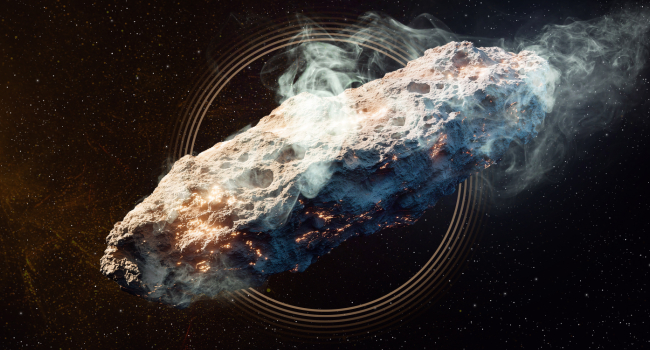
Astronomers studying the interstellar comet 3I/ATLAS have discovered record-breaking amounts of “heavy water” within the object — a finding that suggests it formed under conditions dramatically different from those found in our Solar System.
The results were published in Nature Astronomy and are already reshaping scientists’ understanding of how planetary systems form across the galaxy.
A Record Level of Deuterium
3I/ATLAS became only the third confirmed interstellar object ever observed passing through the Solar System. Less than a year after its discovery, researchers from the University of Michigan analyzed the composition of the comet’s gaseous envelope and found an unusually high concentration of deuterium — a heavy isotope of hydrogen.
In ordinary water, molecules contain two standard hydrogen atoms and one oxygen atom. In heavy water, some of the hydrogen is replaced with deuterium, which contains an additional neutron.
The ratio of deuterium to regular hydrogen in 3I/ATLAS turned out to be roughly 30 times higher than in comets from the Solar System and nearly 40 times higher than in Earth’s oceans.
Lead researcher Luis Salazar Manzano said the amount of deuterium detected in the comet’s water exceeded anything previously observed in either comets or known planetary systems.
What the Discovery Reveals About the Comet’s Origins
Scientists describe heavy water as a kind of “chemical passport” that preserves clues about where an object formed.
According to the researchers, such an extreme concentration of deuterium could only emerge in exceptionally cold regions of space exposed to very low levels of radiation. That implies the environment where 3I/ATLAS formed was fundamentally different from the one that gave rise to our Solar System.
Co-author Teresa Paneque-Carreño explained that the findings suggest the conditions that produced the Solar System may not be typical throughout the Milky Way.
How Scientists Studied the Comet
The research combined observations from the MDM Observatory in Arizona and the powerful Atacama Large Millimeter/submillimeter Array (ALMA) in Chile.
Using ALMA, astronomers were able to directly measure heavy water inside an interstellar object for the first time in history.
Why the Discovery Matters
The discovery provides rare insight into the diversity of planetary formation processes across the galaxy.
Until recently, scientists largely relied on the Solar System as their primary model for understanding how planets and comets form. But 3I/ATLAS appears to come from an environment far colder and chemically different than anything previously studied nearby.
Researchers believe next-generation telescopes and future observations of interstellar visitors could reveal many more examples of planetary systems that evolved under radically different conditions.
In Brief
The interstellar comet 3I/ATLAS contains an unprecedented amount of heavy water — around 30 to 40 times more than comets in the Solar System or Earth’s oceans.
The finding suggests the comet formed in an extremely cold and quiet region of space unlike the environment where our Solar System originated. Published in Nature Astronomy, the study strengthens the idea that planetary systems across the galaxy may form in far more diverse ways than scientists once believed.