make preferable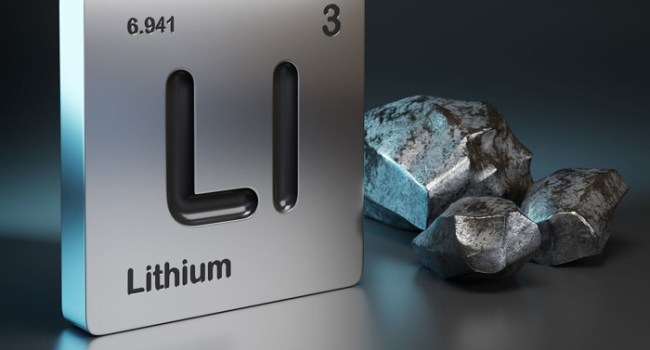
An international team of researchers from West Virginia University has identified an unexpected source of one of the most in-demand metals of the modern era—lithium. The researchers found that lithium can accumulate in pyrite, a mineral that had not previously been considered a host for this element. The discovery could open a new pathway for sourcing raw materials for future batteries. The work was presented at the General Assembly of the European Geosciences Union (EGU).
Where Lithium Was Found
The scientists studied shale samples approximately 380 million years old from the Appalachian Basin in the United States. During the analysis, they discovered significant concentrations of lithium within pyrite crystals—a compound of iron and sulfur that commonly occurs in sedimentary rocks.
One of the study’s authors, Shaili Bhattacharya, noted that the team had detected significant amounts of lithium inside pyrite, which had previously been considered impossible.
Why This Matters
Lithium is a key component of lithium-ion batteries used in smartphones, electric vehicles, energy storage systems, and many other devices. Demand for this metal is rising rapidly alongside the development of “green” energy and electric transportation.
Traditional sources of lithium—igneous rocks and clays—are limited and often associated with serious environmental and economic challenges. As a result, the search for alternative sources is becoming increasingly important.
The new research shows that organic-rich shales may contain lithium in unexpected mineralogical forms. This opens the possibility of using more common geological structures, including mining waste, as a source of raw materials.
Preliminary Results
The authors emphasized that the study remains preliminary. The analysis was conducted on a limited number of samples, and it is not yet known how widespread lithium accumulation in pyrite may be in other regions of the world.
Nevertheless, the discovery could have important practical implications. If technologies for extracting lithium from shale or pyrite-bearing rocks can be commercialized, this could reduce environmental pressure and decrease reliance on traditional deposits.
In Brief
Scientists from West Virginia University have discovered that lithium can accumulate in pyrite, a mineral composed of iron and sulfur that was not previously considered a lithium host. The study of ancient shales from the Appalachian Basin revealed significant concentrations of the metal within pyrite crystals. This discovery could lead to a new, less costly and more environmentally sustainable method of lithium extraction—a resource critically important for electric vehicle batteries and energy storage systems. While the findings are preliminary, they expand understanding of lithium geochemistry and potential sources of this strategic metal. The work was presented at the General Assembly of the European Geosciences Union (EGU).