make preferable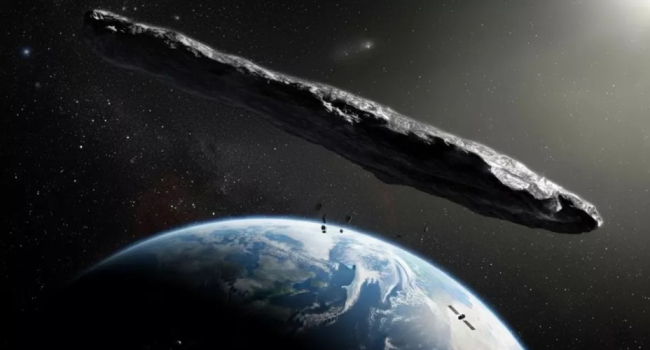
The interstellar comet 3I/ATLAS, the third confirmed “visitor” from another stellar system, demonstrated remarkable activity and a change in chemical composition during its perihelion passage (its closest point to the Sun) in the autumn of 2025. A new study conducted using the Subaru Telescope showed that the composition of its coma (the cloud of gas surrounding the nucleus) changed noticeably after its close approach to the Sun.
What Astronomers Discovered
On January 7, 2026, Japanese scientists led by Yoshiharu Shinnaka from the Koyama Institute of Space Science observed the comet using the 8.2-meter Subaru Telescope at the summit of Maunakea in Hawaii. They measured the ratio of carbon dioxide to water vapor in the coma of the object.
The result proved unexpected: the ratio of CO₂ to H₂O changed compared with earlier data obtained when the comet was still approaching the Sun. This indicated that the chemical composition of the material released from the nucleus did not remain constant.
The authors of the study noted that the change in the chemistry of the coma suggested that the internal chemical composition of 3I/ATLAS differed from its outer layers.
Why This Matters
Comet 3I/ATLAS is of particular interest because it formed around another star billions of years ago. By studying it, scientists gain the opportunity to examine the “building material” of a foreign planetary system and compare it with the material from which objects in our Solar System formed.
The study’s lead researcher, Yoshiharu Shinnaka, explained that by applying observational and analytical methods developed for studying Solar System comets to interstellar objects, scientists were able to directly compare comets from inside and outside the Solar System and investigate differences in their composition and evolution.
The change in composition after perihelion (October 29, 2025) indicates that layers of material with different chemical compositions exist beneath the comet’s surface. When heated by the Sun, these layers become active one after another and release gas into the coma.
What Lies Ahead
Scientists expect that with the commissioning of new survey telescopes in the coming years, significantly more interstellar objects will be discovered. Each of them represents a unique opportunity to study how planetesimals and planets formed in a wide variety of stellar systems.
Shinnaka emphasized that through studying such objects, researchers hoped to gain a deeper understanding of how planetesimals and planets formed across a broad range of stellar systems, including our own Solar System.
The study is scheduled to be published on April 22 in The Astronomical Journal. A preliminary version is already available on the arXiv server.
In Brief
The interstellar comet 3I/ATLAS changed the chemical composition of its coma after passing perihelion in October 2025. Observations using the Subaru Telescope showed that the ratio of carbon dioxide to water vapor changed significantly. This suggests a heterogeneous internal structure of the comet: different layers of material with different chemistry become active one after another when heated by the Sun. The discovery helps scientists better understand the composition of the material from which planets formed in other stellar systems. The study is scheduled to be published on April 22 in The Astronomical Journal.