make preferable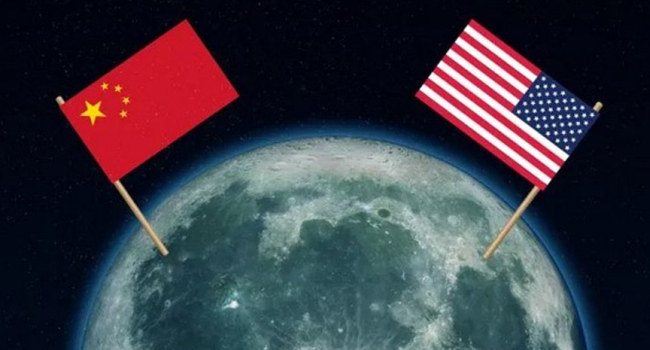
A new space race between the United States and China is unfolding not only for prestige and scientific discovery. The main driver behind today’s renewed interest in the Moon is its resources. This conclusion comes from a major report published by The New York Times examining the renewed competition for Earth’s satellite.
Ice, Helium-3, and the Fuel of the Future
According to the report, one of the most valuable targets is water trapped as ice, which scientists believe has accumulated in permanently shadowed craters near the Moon’s poles. This ice could be converted into drinking water, breathable oxygen, and—most importantly—rocket fuel in the form of hydrogen and oxygen.
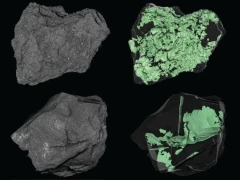
Another highly valuable resource is helium-3. This isotope is extremely rare on Earth but may exist in significant quantities within the Moon’s regolith. On Earth, roughly one pound (about 450 grams) of helium-3 is estimated to be worth around nine million U.S. dollars. In the future, it is considered a potential ideal fuel for nuclear fusion reactors—clean, highly efficient, and producing minimal radioactive waste.
In addition, the far side of the Moon offers an ideal location for large radio telescopes. Because it is completely shielded from Earth’s radio interference, it enables astronomical observations that are impossible from Earth’s surface.
The United States and China Are Planning Lunar Bases
Both nations have clearly stated their intentions to establish permanent bases near the Moon’s south pole, where the largest known deposits of water ice are believed to exist.
Through the Artemis program, NASA is preparing for astronaut landings as part of the Artemis 3 mission, expected sometime after 2027–2028.
At the same time, China is actively developing its own crewed lunar program and has openly expressed ambitions to be among the first to build a permanent scientific base on the Moon.
The Current Artemis 2 Mission
On April 3, 2026, NASA released the first image of Earth taken from the Orion spacecraft during the Artemis 2 mission. In the photograph, Earth appeared as a thin crescent.
The mission itself launched on April 1, marking the first crewed journey toward the Moon in more than 50 years. Its main objective is to test all systems of the Orion spacecraft in deep-space conditions ahead of future landings on the lunar surface.
The launch had originally been scheduled for March but was postponed to early April due to technical issues, including challenges related to the spacecraft’s heat shield and other onboard systems.
In Brief
The new Moon race between the United States and China is driven not only by a desire to repeat the achievements of the Apollo program era but also by practical economic and strategic motives. The Moon is increasingly viewed as a potential source of water, oxygen, rocket fuel, and rare helium-3, which could one day power fusion energy systems.
Competition for access to resources near the lunar south pole—and the opportunity to establish permanent bases—is shaping today’s rivalry in space. The Artemis 2 mission, launched on April 1, 2026, represents an important step toward returning humans to the lunar surface.