make preferable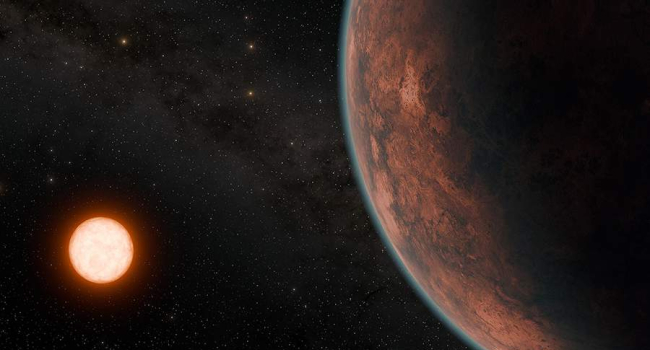
Out of more than 6,000 known exoplanets, scientists have identified just 45 rocky worlds most likely to support conditions suitable for life. The new catalog has been published in Monthly Notices of the Royal Astronomical Society.
The study was conducted by astronomers at Cornell University under the leadership of Lisa Kaltenegger. They used the latest data from the Gaia mission (DR3) along with the NASA Exoplanet Archive to precisely identify planets located in the habitable zone—the region around a star where temperatures allow liquid water to exist on the surface.
The presence of liquid water is considered one of the key conditions for the emergence and sustainability of life, making such planets top priorities for future observations.
Most Promising Candidates
The list includes several well-known exoplanets, among them:
- Proxima Centauri b (the closest potentially habitable planet to Earth);
- planets in the TRAPPIST-1 system (especially d, e, f, and g), located just 40 light-years away;
- Kepler-186f;
- LHS 1140 b (about 48 light-years away).
Some of these worlds receive roughly the same amount of energy from their stars as Earth does from the Sun, making them particularly interesting targets for studying atmospheres and potential biosignatures.
In addition to the main list of 45 planets, researchers identified another 24 objects within a narrower “three-dimensional” habitable zone using more conservative assumptions about allowable heating. The catalog also includes planets with elongated orbits, such as TOI-700e and K2-3d, to investigate whether such worlds can remain habitable despite periodic temperature fluctuations.
Why the New Catalog Matters
The study helps astronomers focus their efforts on the most promising targets. In the coming years, these planets are expected to be studied using space telescopes, including James Webb Space Telescope, as well as ground-based giants like the Extremely Large Telescope. The main goals are to determine the presence of atmospheres, analyze their composition, and assess surface conditions.
The research team noted that their work effectively identifies where humanity should look for life if it ever becomes possible to send a spacecraft similar to the one described in the novel Project Hail Mary.
In Brief
Astronomers from Cornell University have compiled a catalog of 45 rocky exoplanets located in habitable zones where liquid water may exist. Based on data from Gaia and the NASA Exoplanet Archive, the list includes Proxima Centauri b, several planets in the TRAPPIST-1 system, Kepler-186f, and LHS 1140 b. An additional 24 candidates were identified under stricter criteria. The catalog will help direct telescope observations toward the most promising worlds and refine our understanding of habitability in the universe. The study is published in Monthly Notices of the Royal Astronomical Society.