make preferable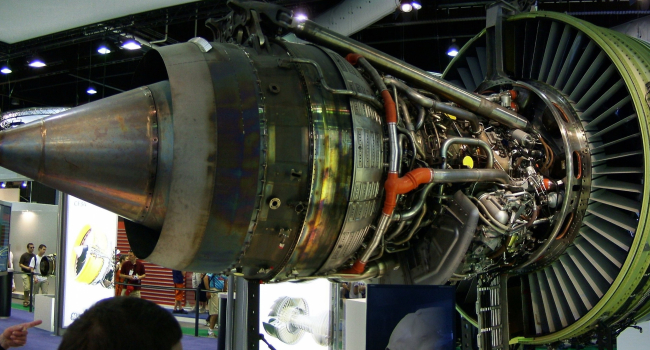
Researchers from the Perm National Research Polytechnic University (PNRPU) have developed a new sound-absorbing structure for aircraft engines. The panels are 1.5 times lighter than traditional multilayer designs, while their noise-reduction efficiency is 20 decibels higher than standard single-layer honeycomb structures. The development operates across a wide frequency range—from 2000 to 5400 Hz. This was reported by the university’s press service.
Why aircraft noise remains a problem
Noise from aircraft engines is one of aviation’s most pressing environmental and social challenges. Inside an aircraft cabin, sound levels can reach 80–85 dB, comparable to a busy urban highway. For passengers, such noise leads to increased fatigue and discomfort during long flights. For flight crews, it means continuous exposure to noise that can affect health over time.
Millions of people living near airports must also endure the constant roar of takeoffs and landings, which can disturb sleep and increase the risk of stress and cardiovascular problems.
The main source of this noise is turbofan and turbojet engines. To reduce it, the internal channels of engines—such as the air intake, nozzle, and fan duct—are lined with sound-absorbing panels filled with honeycomb structures. The most common design consists of hexagonal cells of identical height, resembling a beehive. These are inexpensive to produce and perform well in laboratory conditions, but their effectiveness drops significantly during real flight.
“As a rule, these are honeycomb cells of equal height tuned to specific frequencies. In airflow conditions they work worse: the air disrupts their tuning, reducing noise-suppression efficiency,” explains Karina Akhunzyanova, junior researcher at PNRPU’s Laboratory of Spatially Reinforced Composite Materials.
A new design: cones instead of identical honeycombs
The researchers proposed a fundamentally different geometry—cells shaped like upright and inverted cones. Each element is tuned to its own resonance frequency, and the combination of different volumes and shapes allows the panel to absorb sound across a wide frequency range simultaneously.
The samples were produced using a 3D printer and tested on a special acoustic installation that simulates real conditions inside an aircraft engine. The generated noise levels ranged from 130 to 150 dB, typical values for a working jet engine.
The results were impressive: the new structure barely reacts to airflow, maintains stable efficiency under real conditions, and provides a 20 dB improvement compared with classical single-layer honeycomb panels. At the same time, the panel weight decreased by 1.5 times, a crucial factor in aviation where every extra kilogram matters.
“Our design practically does not react to airflow and works stably in real conditions. The new panels allow aircraft to become quieter without making them heavier or increasing production costs,” said Pavel Pisarev, head of the PNRPU laboratory.
Additional advantages: resistance to manufacturing errors
Another benefit is that the new panel is much less sensitive to production inaccuracies. Traditional honeycomb structures are precisely tuned to a few specific frequencies, so even small deviations in cell size—caused by manufacturing errors or deformation—can significantly reduce efficiency.
The cone-based structure, however, is designed for a wide frequency range and maintains good acoustic performance even when there are minor deviations in geometry or materials.
Future applications
If the technology reaches mass production, it could significantly reduce noise both inside the cabin (for passengers and crew) and outside the aircraft, benefiting residents living near airports.
This is particularly important for modern high-bypass turbofan engines, where fan and nozzle noise remain major sources of sound.
The development has already passed laboratory testing, and the next stage will involve bench tests and flight trials on real engines.
In brief
Scientists from Perm National Research Polytechnic University developed new sound-absorbing panels for aircraft engines with cone-shaped cells. They are 1.5 times lighter than multilayer alternatives, 20 dB more effective than traditional single-layer honeycomb panels, and work reliably across a 2000–5400 Hz frequency range while remaining largely unaffected by airflow. The design is also resistant to manufacturing errors and could significantly reduce noise both inside aircraft cabins and around airports.