make preferable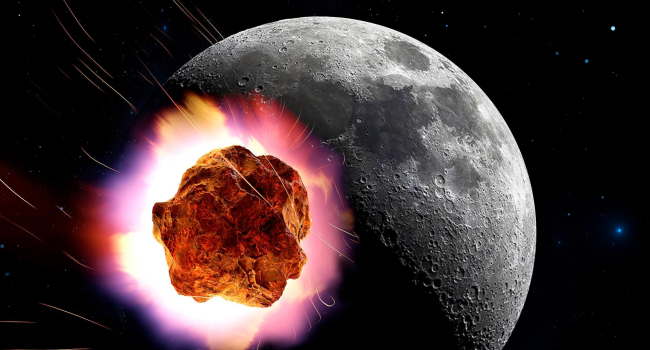
Asteroid 2024 YR4, discovered in late 2024, briefly became the most “dangerous” known object after early calculations suggested a small chance of collision first with Earth and later with the Moon. Now, thanks to observations by the James Webb Space Telescope (JWST), scientists say with confidence that no collision will occur. The asteroid will instead pass safely 21,200 km (13,200 miles) above the Moon’s surface.
A short history of a “dangerous” asteroid
Asteroid 2024 YR4 was discovered by the ATLAS (Asteroid Terrestrial-impact Last Alert System) on December 27, 2024. The object is estimated to be about 60 meters in diameter. If an asteroid of this size struck Earth, it could potentially destroy a city or trigger a powerful tsunami if it fell into the ocean.
Early orbital calculations suggested that the asteroid might collide with Earth on December 22, 2032. Within a few days, however, astronomers refined the trajectory and ruled out any risk to Earth.
A remaining possibility of an impact with the Moon was still considered, with the probability estimated at 4.3%. The orbit was not yet known precisely enough, and the next good observation opportunity was expected only in 2028.
Astronomers from the Johns Hopkins University Applied Physics Laboratory (JHUAPL) realized, however, that the James Webb Space Telescope might be able to observe the asteroid earlier. Between February 18 and 26, 2026, the asteroid passed across a faint star field whose positions are precisely mapped by the European Space Agency’s Gaia mission, making accurate tracking possible.
How JWST solved the problem
The field of view of JWST’s near-infrared camera is only about 2.2 square arcminutes, and the asteroid itself was among the faintest objects ever targeted by the telescope.
Nevertheless, the JHUAPL team, working together with JWST engineers, the ESA Near-Earth Object Coordination Centre, and NASA’s Center for Near-Earth Object Studies, successfully pointed the telescope at the object.
The observations allowed scientists to measure the asteroid’s motion relative to background stars with high precision. The result: a collision with the Moon has been ruled out. Instead, the asteroid will pass 21,200 km above the lunar surface — very close by cosmic standards, but completely safe.
What would have happened if it had hit
If the asteroid had struck the near side of the Moon, scientists would have witnessed a unique event: the first large lunar impact observed in real time. The collision would likely have produced a blinding flash and created a crater roughly 1 kilometer wide.
The energy of the impact would have been equivalent to about six million tons of TNT, comparable to a large nuclear explosion.
Some of the ejected material would have fallen back onto the Moon, while some debris could have traveled toward Earth, potentially producing a brief but spectacular meteor shower lasting several days. Smaller fragments might also have posed a long-term hazard for satellites orbiting Earth.
With the new orbital data, however, this scenario is no longer expected.
Why this matters
The precise tracking of 2024 YR4 highlights how far modern astronomy has advanced. The James Webb Space Telescope, originally designed to study distant galaxies and exoplanets, has also proven valuable for planetary defense.
The more accurately astronomers can determine the orbits of potentially hazardous objects, the better humanity can prepare — or, as in this case, simply breathe a sigh of relief.
In brief
Asteroid 2024 YR4 (about 60 meters wide) will collide with neither Earth nor the Moon in 2032. Observations by the James Webb Space Telescope in February 2026 refined its orbit and showed that it will pass 21,200 km above the Moon’s surface. Earlier estimates suggested a 4.3% chance of impact. A collision could have produced a 1 km crater and a temporary meteor shower near Earth, but that scenario has now been ruled out. The observations also demonstrate JWST’s usefulness for planetary defense, as astronomers continue monitoring potentially hazardous asteroids.