make preferable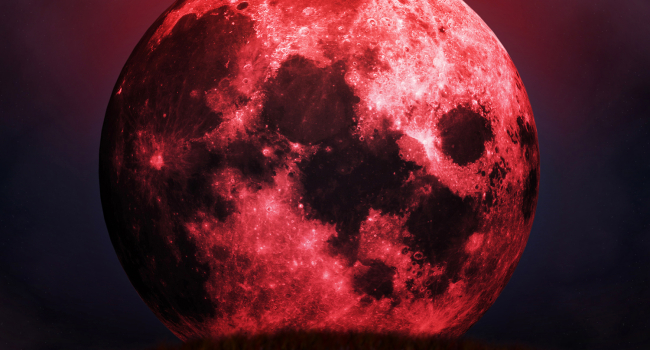
The only total lunar eclipse of 2026 has begun. The Moon will be fully immersed in Earth’s shadow and turn a deep red — the famous “Blood Moon.” The total phase will last 58 minutes and 19 seconds, and the next event like this won’t occur until the end of 2028. This is a rare chance to witness one of the most spectacular celestial phenomena — and it is completely safe to observe.
When and How Long the Eclipse Lasts
- Date: March 3, 2026
- Total phase: 14:04–15:03 Moscow time (15:04–16:03 Yerevan time, 11:04–12:03 UTC)
- Maximum eclipse: 14:33 MSK (11:33 UTC)
- Entire duration: 5 hours 39 minutes
The full Moon (“Worm Moon”) occurs at 14:38 MSK — about half an hour after the start of the total phase.
Where the “Blood Moon” Will Be Visible
The eclipse will be clearly visible in East Asia, Australia, New Zealand, the Pacific region, North and Central America, and the western part of South America. In some areas of East Asia and eastern Australia, the total phase will occur at night or after midnight on March 4 local time.
In Russia, the eclipse will be visible in the Far East (Vladivostok, Petropavlovsk-Kamchatsky, Yuzhno-Sakhalinsk), where the Moon will be high above the horizon. In central and western regions (Moscow, St. Petersburg, Yekaterinburg), the eclipse will not be visible at all — the Moon will be below the horizon.
In the United States and Canada, visibility varies from west to east:
- West Coast (Los Angeles, San Francisco, Seattle, Vancouver) will see the entire eclipse during nighttime.
- Central states (Denver, Dallas, Chicago) will see the maximum and the full phase.
- East Coast (New York, Toronto, Washington) will see the full phase low above the horizon, with the Moon setting during totality.
In Europe, Africa, and the Middle East, the eclipse will not be visible — the Moon will be below the horizon.
How to See the Eclipse in Your City
The easiest way is to download the Sky Tonight or Eclipse Guide app. Enter “March 2026 lunar eclipse,” and the app will immediately show:
- Whether the eclipse is visible in your city;
- The exact time of all phases in local time;
- A visibility map;
- The Moon’s direction and altitude in the sky.
If you are observing a lunar eclipse for the first time, start at least 30 minutes before the total phase — you’ll see Earth’s shadow slowly “devour” the lunar disk.
How to Photograph the “Blood Moon”
Photographing a lunar eclipse is easier than a solar eclipse — no protective glasses are needed — but the Moon’s brightness changes dramatically, so preparation is important:
- A tripod is essential — exposure times will be longer during totality.
- A DSLR or mirrorless camera with a telephoto lens (200–600 mm) is ideal. A smartphone can work, but detail will be lower.
- Start with a short exposure (1/250 s) and gradually increase it to 1–2 seconds, raising ISO to 400–1600.
- If the Moon is low on the horizon, include a foreground element (trees, buildings) for a more dramatic shot.
Why the Moon Turns Red
During a total eclipse, direct sunlight does not reach the Moon — it is illuminated only by rays passing through Earth’s atmosphere. Short blue wavelengths scatter (as during a sunset), while red wavelengths pass through more easily. That is why the Moon takes on a copper-red hue.
In Brief
The only total lunar eclipse of 2026 takes place on March 2–3. The total phase (“Blood Moon”) lasts from 14:04 to 15:03 MSK, with maximum at 14:33. It will be best visible in East Asia, Australia, New Zealand, the Pacific region, and North and Central America. In Russia, it is visible in the Far East. In Europe, Africa, and the Middle East, it will not be visible.
For exact timing and visibility in your city, use Sky Tonight or Eclipse Guide. The eclipse can be observed with the naked eye, while binoculars or a telescope will reveal more detail. The next total lunar eclipse will not occur until the end of 2028.