make preferable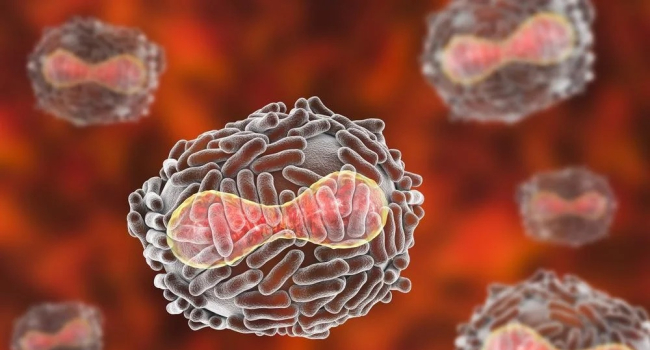
An unusual giant virus discovered in Japan has revealed behavior inside its host cell that strikingly resembles the function of a cell nucleus. The discovery lends support to one of the most intriguing hypotheses in modern biology — that viruses may have played a key role in the emergence of eukaryotic cells and multicellular life. The study’s findings were published in the Journal of Virology.
Ushikuvirus — a new giant on the scene
The virus, named Ushikuvirus after the city of Ushiku near Tokyo where it was discovered, was found in a freshwater pond. It infects amoebae and belongs to the group of giant viruses — entities that rival bacteria in both size and structural complexity. Such viruses possess enormous genomes and are capable of creating specialized internal structures within host cells to reproduce.
When Ushikuvirus infects an amoeba, it destroys the host’s nuclear envelope and forms a so-called viral factory — an isolated compartment where viral DNA replication and the assembly of new particles take place. In its shape, structure, and function, this factory is remarkably similar to a true cellular nucleus.
Why this matters for evolution
The cell nucleus is one of the defining features of eukaryotes, a group that includes all plants, animals, fungi, and humans. Prokaryotes (bacteria and archaea) lack a nucleus — their DNA simply resides in the cytoplasm. The emergence of the nucleus is considered one of the most important events in the history of life, yet the mechanism behind its origin remains unclear.
One of the leading explanations is the viral theory of eukaryogenesis. According to this hypothesis, an ancient large DNA virus once infected the ancestor of eukaryotic cells. Instead of destroying the host, it gradually became a permanent structure. This “viral guest” took over the storage and protection of genetic material and, over time, evolved into the nucleus.
Ushikuvirus provides new evidence in support of this idea. Its ability to dismantle the host nucleus and create its own nucleus-like factory demonstrates how such a transition might have occurred. Viral factories produced by giant viruses have long been considered potential evolutionary precursors of cellular nuclei.
Implications and future research
Discoveries like this help scientists reconstruct the early stages of complex cell evolution. Giant viruses — a relatively recently recognized group — are increasingly proving to be crucial to understanding how eukaryotes arose from simpler prokaryotic cells. Ushikuvirus is yet another vivid example of how diverse and complex viruses can be, and how significant their role in the history of life on Earth may have been.
Further research will determine how closely Ushikuvirus resembles the hypothetical “founder virus” of eukaryotes. It is possible that similar viruses still exist in nature, waiting to be discovered.
In brief
A giant virus called Ushikuvirus has been discovered in Japan. When it infects amoebae, it destroys their nucleus and creates its own viral factory that closely resembles a true cellular nucleus. This finding supports the hypothesis that the eukaryotic nucleus — a key structure of complex cells — may have originated from ancient viruses. Scientists believe such viruses could have played a decisive role in the evolution of multicellular life. The new data help clarify how eukaryotes emerged from simple prokaryotic ancestors.