make preferable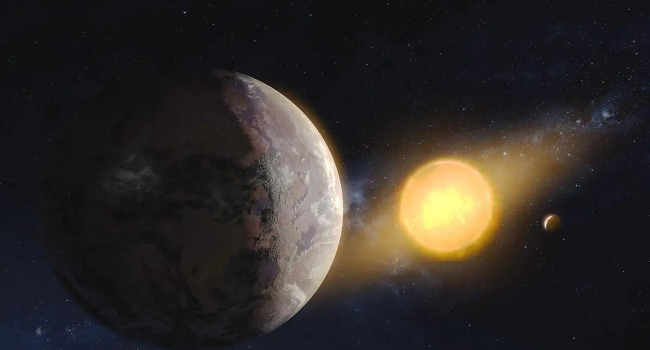
The classical habitable zone — also known as the “Goldilocks Zone” — has long been considered the main guide in the search for extraterrestrial life: the region around a star where temperatures allow liquid water to exist on a planet’s surface. But a new study shows that this approach is too narrow. Liquid water — and therefore potentially life — can exist much farther from a star, and even closer to it than previously thought. The research was published on January 12, 2026, in the Astrophysical Journal.
Why the traditional habitable zone is outdated
The habitable zone is defined as the range where a planet receives enough energy from its star to keep water liquid, without it evaporating or freezing. In the Solar System, this roughly corresponds to the region between Venus and Mars. However, the authors of the new study emphasize that liquid water is not the only criterion. Chemical energy sources, elemental diversity, and long-term environmental stability are also important.
“Other factors, such as chemical energy sources, elemental diversity, and the long-term stability of the environment, are equally important,” the researchers write.
Liquid water on the night side of tidally locked planets
Most planets orbiting red and orange dwarf stars (M- and K-class) are tidally locked, meaning they always show the same side to their star. The day side heats up, while the night side freezes. It was previously thought that the atmosphere on the dark side would collapse and freeze.
However, 3D climate models show that with sufficient atmospheric pressure or oceans, heat is effectively redistributed from the day side to the night side. As a result, liquid water can persist on the permanent night side — even if the planet is closer to its star than the inner edge of the classical habitable zone.
This extends the potential habitable zone inward, closer to the star. These are precisely the kinds of planets that JWST has recently detected with water vapor and volatile compounds in their atmospheres.
Liquid water under ice on cold planets
The authors also suggest extending the habitable zone outward, farther from the star. Even very cold planets can host liquid water beneath thick ice layers — in subglacial lakes or oceans heated by tidal forces or residual internal heat. On Earth, such conditions sustain microbial life in Antarctica’s subglacial lakes.
This means that potentially habitable worlds may exist much farther from their star than previously believed.
New targets for the search for life
Reevaluating the habitable zone boundaries opens up new classes of objects for study. In particular, warm super-Earths around red dwarfs, previously considered too hot, now fall within the expanded zone. The same applies to icy worlds on outer orbits — subsurface oceans may be more common than expected.
“Signatures of water vapor and volatile compounds have been detected in the transit spectra of small exoplanets by JWST. Some of these exoplanets are closer to their M-class host stars than the inner edge of the classical habitable zone,” the authors note.
This gives astronomers new targets for observation and expands the list of potentially habitable worlds.
In brief
Scientists have revised the concept of the habitable zone: liquid water may exist not only within the classical boundaries, but also closer to a star (on the night side of tidally locked planets) and farther from it (beneath thick ice). This explains recent JWST observations of water vapor on warm super-Earths orbiting red dwarfs. Expanding the habitable zone opens up new classes of planets to search for life and suggests that potentially habitable worlds may be far more numerous than previously thought.