make preferable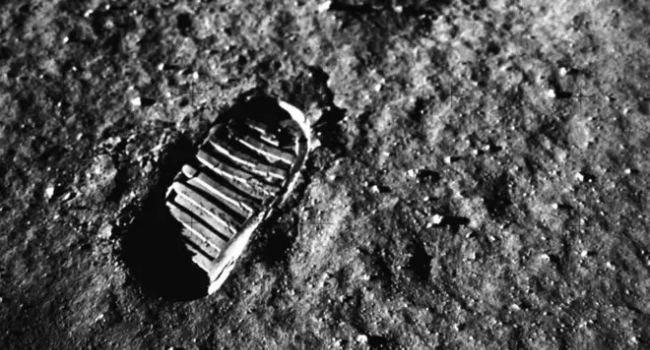
Spacecraft landings on the Moon may leave behind a chemical footprint that spreads across the lunar surface and settles in locations of immense scientific value — polar craters containing ancient ice. This conclusion comes from researchers in Portugal and the European Space Agency (ESA). The findings were published in November 2025 in the Journal of Geophysical Research: Planets.
How rocket exhaust contaminates the Moon
According to Space.com, modern lunar landers use fuel that produces methane as a combustion byproduct — one of the most common organic compounds. On Earth, methane quickly disperses in the atmosphere. But on the Moon, where there is virtually no atmosphere, molecules travel along ballistic trajectories, essentially hopping from one location to another.
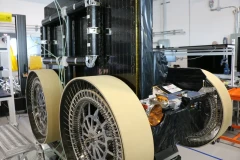
A team led by Francisca Paiva from the University of Lisbon modeled the landing of Europe’s Argonaut lunar lander near the Moon’s south pole. Their calculations showed that methane from the engine exhaust spreads rapidly across the surface and can reach the opposite pole within two lunar days (about two Earth months). After seven lunar days, nearly 54% of the molecules settle in cold polar regions, including 12% at the north pole — thousands of kilometers from the landing site.
Their trajectories are essentially ballistic. They simply jump from one point to another, Paiva explained.
Why polar craters are especially vulnerable
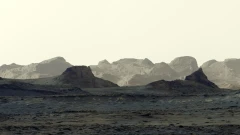
Permanently shadowed craters at the lunar poles are among the coldest places in the Solar System. Temperatures are so low that water ice and other volatile substances can remain preserved for billions of years. Scientists consider these deposits a unique archive: they may contain organic material delivered by comets and asteroids during the early days of the Solar System — including molecules that could be precursors to life.
Unfortunately, these same craters are where much of the methane eventually accumulates. Unlike Earth, where geological activity and the atmosphere have erased much of the planet’s earliest history, the Moon preserves its record in near-pristine condition. Any contamination could irreversibly damage this scientific archive.
How contamination could be prevented
The authors emphasize that the Moon should be treated as a scientific environment as valuable as Antarctica or protected national parks on Earth.
“We have laws regulating pollution in terrestrial environments like Antarctica and national parks. I believe the Moon is an environment of equal value,” Paiva said.
ESA is already developing guidelines to protect polar regions. In the future, modeling each spacecraft’s exhaust plume could become a mandatory part of mission planning, helping minimize chemical footprints and preserve the Moon’s most valuable research sites.
In brief
Lunar landings release methane that can quickly spread across the surface and settle in polar craters. These craters contain ancient ice with possible traces of organic material — potential evidence related to the origins of life on Earth. The study suggests that contamination could permanently damage this scientific archive. Researchers are calling for cleaner propulsion systems and stronger protections for the Moon’s polar regions, treating them with the same care as Antarctica on Earth.