make preferable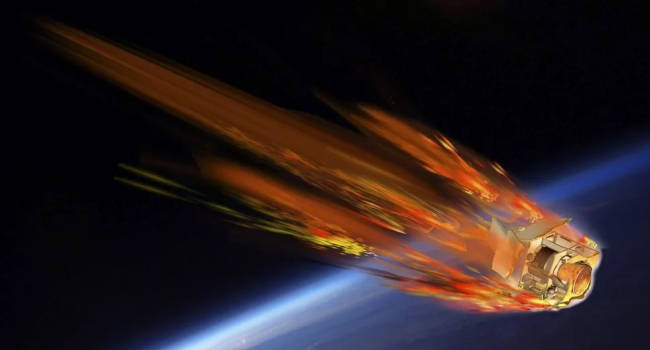
The European Space Agency (ESA) has officially approved the Draco project, a unique mission in which a specially designed satellite will be deliberately destroyed during reentry into Earth’s atmosphere. The goal is to collect real-time data on how spacecraft materials behave under extreme temperatures and aerodynamic loads. This was reported by Space.com.
Why a controlled “self-destruction” is needed
On average, about three large pieces of space debris fall toward Earth every day, including defunct satellites and spent rocket stages. We know very little about where they actually land or how much of them truly burns up in the atmosphere. Current models are based on laboratory tests, wind tunnels, and computer simulations, all of which only approximate real conditions.
“Understanding how different materials behave during burn-up will help engineers design satellites that fully disintegrate, leaving nothing behind either in orbit or in the atmosphere,” ESA explains.
Draco will be the first fully controlled experiment in history to study the atmospheric destruction of a satellite using a complete suite of onboard sensors. The spacecraft, weighing between 150 and 200 kilograms and roughly the size of a washing machine, is scheduled for launch in 2027. About 12 hours after reaching orbit, it will intentionally reenter the atmosphere over an uninhabited area of the ocean.
What Draco will measure
The spacecraft will carry 200 sensors and four cameras. They will record:
- temperatures at different points in the structure;
- mechanical loads and structural deformation;
- ambient pressure;
- the process of material breakup and disintegration.
A data capsule with a diameter of 40 centimeters will store the measurements onboard. After deploying a parachute, it will transmit telemetry via a geostationary satellite during a 20-minute window before sinking into the ocean.
Why this matters for the future of spaceflight
ESA is actively promoting the Zero Debris concept, which aims to eliminate space debris entirely by 2030. Achieving this requires designing satellites that completely disintegrate during atmospheric reentry, leaving no fragments in orbit and not contaminating the upper atmosphere.
“We need a better understanding of what happens when satellites burn up in the atmosphere and to validate our reentry models,” said Holger Krag, Head of Space Safety at ESA.
Today, scientists cannot say with certainty how many metal components, such as fuel tanks or batteries, actually burn up and how many survive to reach Earth or remain in orbit. Draco will provide the first real data from inside the destruction process itself.
Risks and scientific value
The experiment is expected to answer key questions:
- Which materials fully vaporize, and which survive?
- How do ablation products affect the chemistry of the upper atmosphere?
- Is it possible to design satellites that are guaranteed to leave no debris?
According to experts, these measurements represent a crucial missing piece in understanding spacecraft breakup and its environmental impact. In the future, this knowledge will help reduce risks to people on Earth and improve the sustainability of space activities.
In brief
ESA is launching the Draco mission. In 2027, a satellite weighing 150 to 200 kilograms will deliberately reenter Earth’s atmosphere to measure in real time how spacecraft materials break down under extreme heat. The spacecraft will carry 200 sensors and four cameras. The goal is to obtain the first precise data on the disintegration of spacecraft during reentry. This will help engineers design satellites that burn up completely, leaving no debris in orbit and minimizing atmospheric pollution. Draco is a key step toward achieving the Zero Debris goal by 2030.