make preferable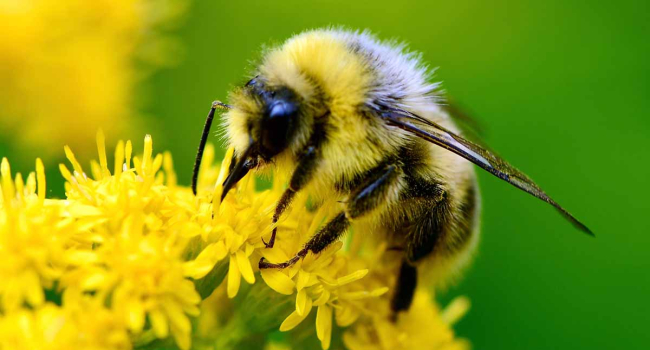
People have always wondered whether we are alone in the Universe. If not, what does intelligent life look like and how can we communicate with it? The distances between stars are enormous. The nearest one, Proxima Centauri, is 4.4 light years away, and a real dialogue would take decades. Under such conditions, the language of communication must be universal. And here an unexpected helper appears: the bee.
Mathematics as a universal language
The idea that mathematics is the language of the Universe is not new. Galileo once said that the book of nature is written in the language of mathematics, Space.com reports. In science fiction this is also a common idea. In Carl Sagan’s Contact, aliens begin communication with a sequence of prime numbers. In Liu Cixin’s The Three Body Problem, contact starts through mathematical puzzles. In Ted Chiang’s Story of Your Life, adapted into the film Arrival, communication is based on non linear mathematics that reflects a different perception of time.
Real attempts at interstellar communication also rely on numbers. The Golden Records on the Voyager probes contain mathematical and physical constants. The Arecibo message of 1974 consisted of 1679 bits arranged to show numbers from 1 to 10 and the atomic numbers of the elements in DNA. In 2022, scientists even developed a binary language designed to introduce aliens to human mathematics, chemistry, and biology.
But how can we test whether such a language is truly universal without aliens? The answer turns out to be surprisingly simple: bees.
Bees as “aliens” on Earth
The evolutionary paths of bees and humans diverged more than 600 million years ago. We have completely different brains, body sizes, and sensory systems. Yet both lines of evolution independently developed complex communication and social behavior.
Bees use the waggle dance to convey precise information about distance, direction, angle relative to the Sun, and the quality of a food source. Humans use language. Both systems function in highly organized societies.
This makes bees an ideal model of an “alien” on Earth: an intelligent being with a fundamentally different kind of mind.
Bees can do mathematics
From 2016 to 2024, scientists from the SETI Institute and other research centers conducted experiments with freely flying bees. The bees voluntarily came to test platforms in exchange for sugar syrup and learned basic mathematical concepts:
addition and subtraction of one
distinguishing between even and odd quantities
ordering numbers
understanding zero
linking symbols to quantities, similar to Arabic or Roman numerals
Despite their tiny brains, bees demonstrated the ability for abstract thinking and numerical reasoning. This shows that even species with radically different brain structures can grasp basic mathematics.
Implications for SETI
If two species separated by 600 million years of evolution, humans and bees, can both understand mathematics, then intelligent beings elsewhere in the Universe likely can too. This makes numbers and simple mathematical operations the most reliable universal language for first contact.
An open question remains. Will different civilizations develop different “dialects” of mathematics, just as humans have different spoken languages? And is mathematics a purely human construct, or an inevitable consequence of any form of intelligence?
In brief
Scientists at the SETI Institute propose using bees as a model of alien intelligence to help design interstellar communication. Despite the vast evolutionary distance, both humans and bees can count, distinguish parity, understand zero, and link symbols with quantities. This supports the idea that mathematics may be a universal language of the Universe. If intelligent civilizations exist, they likely possess basic arithmetic, and that is probably the best place to begin a first contact.