make preferable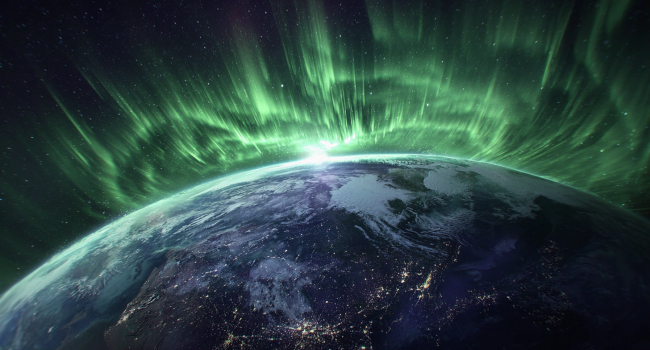
On January 19, 2026, Earth experienced an extremely rare event: an S4-level radiation storm, the most powerful since October 2003, when the famous “Halloween storms” occurred. This was reported by Space.com, citing data from the NOAA Space Weather Prediction Center.
What Is a Radiation Storm?
Solar radiation storms occur when a powerful magnetic eruption on the Sun, often accompanied by a coronal mass ejection, accelerates charged particles, mainly protons, to speeds close to that of light. These particles travel the 150 million kilometers to Earth in just tens of minutes.
On the NOAA scale, which ranges from S1 (minor) to S5 (extreme), the current storm reached S4 (“severe”). For comparison, an S5-level event has never been recorded in the entire history of modern observations.
Unlike geomagnetic storms, radiation storms are invisible to the eye but extremely dangerous for space-based technology. High-energy protons penetrate Earth’s magnetosphere and rush toward the polar regions, where they are absorbed by the upper layers of the atmosphere.
Impact on Earth and in Space
For people on the surface, there is no danger: the atmosphere and Earth’s magnetic field provide reliable protection. This was not a ground-level event, in which particles are energetic enough to reach the surface. The particle spectrum was relatively “soft.”
At higher altitudes, however, the situation is different:
- Astronauts and crews of polar airline flights receive increased radiation doses.
- Satellites experience disruptions: electronics can malfunction, sensors may become overloaded, and data can be lost. During the storm, temporary losses of telemetry were recorded, a classic symptom of an intense proton flux.
It is important to note that a radiation storm and a geomagnetic storm are different phenomena. Geomagnetic storms cause auroras and problems in power grids, while radiation storms are a direct bombardment by charged particles.
Historical Context
The S4 storm of 2026 is the first of this magnitude in two solar cycles. The previous record event occurred in October 2003, when proton flux levels reached extreme values. That period was also marked by widespread disruptions in satellite communications and power systems.
The current storm was caused by a series of powerful solar flares, including X-class events that occurred in mid-January.
In Brief
On January 19, 2026, Earth experienced an S4-level radiation storm, the strongest since 2003. The flux of solar protons exceeded 10,000 units. There was no danger for people on the ground, but satellites and astronauts were subjected to increased radiation exposure. This is not the same as a geomagnetic storm; the mechanisms and consequences are different. The event highlights how active the Sun has become in the current cycle and how important it is to monitor space weather.