make preferable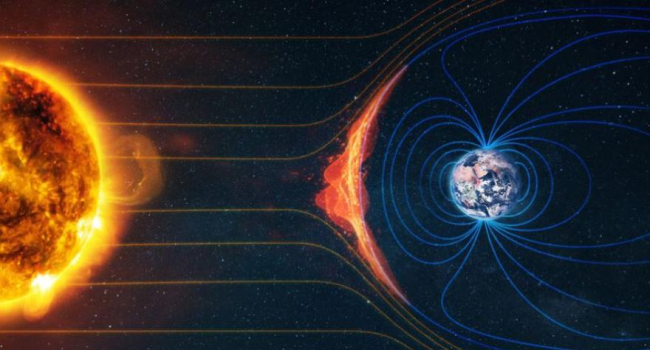
The Solar Astronomy Laboratory of the Space Research Institute of the Russian Academy of Sciences warned that powerful geomagnetic disturbances of levels G3 to G4 are expected on January 20, 2026. On the five-point scale, where G1 is weak and G5 is extreme, these levels correspond to strong and very strong storms.
A coronal mass ejection is approaching
According to the laboratory, a frontal coronal mass ejection that left the Sun in recent days is moving toward Earth. Specialists reported that the ejection is traveling directly toward the planet and is expected to arrive on January 20, with the anticipated storm intensity reaching levels G3 to G4.
At present, the active region on the Sun is already partially visible, and scientists continue to monitor its development. They note that a more accurate forecast of the storm’s strength and duration will be possible closer to the date, when data on the speed and density of the plasma cloud become more precise.
How magnetic storms affect people
Leading researcher at the Space Research Institute, Natan Eismont, explained that not all solar flares and ejections are dangerous. Only powerful coronal mass ejections pose a real threat, because when they reach Earth they can cause geomagnetic storms. He clarified that solar events such as strong bursts or flares in the solar corona can eject plasma, and if dense and powerful plasma clouds reach Earth, they contribute to the formation of a magnetic storm.
He also stated that magnetic storms do affect the well-being of some people, but this group represents a minority. In meteorologically sensitive individuals, headaches, blood pressure fluctuations, and sleep disturbances may intensify. However, for most healthy people, such storms pass almost unnoticed.
Possible consequences
Storms of levels G3 to G4 can cause:
- interference in radio communications at high latitudes;
- voltage fluctuations in power grids;
- disruptions in satellite operations and navigation systems;
- bright auroras visible even at mid latitudes.
During such periods, astronauts on the International Space Station and passengers on long-haul flights are usually advised to avoid unnecessary spacewalks and flights at very high altitudes.
In brief
On January 20, 2026, the Earth is expected to experience G3 to G4 level magnetic storms caused by a frontal coronal mass ejection from the Sun. These are strong and very strong disturbances on the five-point scale. Natan Eismont from the Space Research Institute explained that such storms may affect the well-being of meteorologically sensitive people, who are a minority, and can also cause interference in communications and power systems. The situation requires monitoring, but for most people it does not pose a serious danger.