make preferable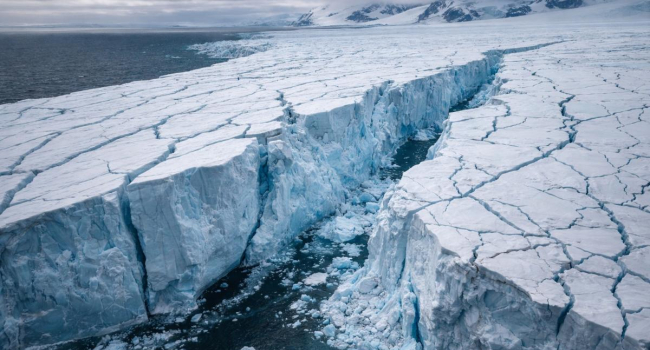
The Thwaites Glacier in West Antarctica, known as the “Doomsday Glacier” because of its potential to sharply raise global sea levels, continues to rapidly deteriorate. Scientists have recently recorded accelerated movement of the glacier, which could lead to the calving of a gigantic iceberg the size of Great Britain. Anatoly Tavritsky, an oceanologist and member of the Russian Geographical Society, spoke to aif.ru about the risks of this process.
Danger to shipping
The calving of such an iceberg would create a constant threat to maritime routes.
“It will pose a permanent danger. The position of this ice mass will need to be continuously monitored, and navigational warnings must be issued to seafarers,” the expert noted.
The massive ice floe would drift toward the equator, enter warmer currents, and gradually melt. This process would take years, but it would require uninterrupted monitoring.
Risk of “awakening” ancient organisms
Melting poses not only physical but also biological risks. Beneath the ice, frozen soil particles and microorganisms have been preserved for thousands of years.
“There should also be soil particles there, which will gradually dissolve and settle on the seabed. There may also be organisms in a frozen state; as they slowly thaw, they could spread into the ocean. Everything needs to be monitored, observations and research must be conducted,” Tavritsky added.
Ancient bacteria or viruses that have remained dormant for millennia could become active in the ocean, spread, and potentially cause unknown ecological or even epidemiological consequences.
Global climate risks
Western scientists warn that complete melting of the Thwaites Glacier would raise global sea levels by at least 60 centimeters. In the worst case, the rise could reach 3 to 5 meters, triggering a chain reaction of melting other glaciers and leading to a climate catastrophe: flooding of coastal regions, migration of millions of people, and disruption of ecosystems.
The glacier is already losing stability due to warming of the ocean and atmosphere, accelerating its slide into the sea.
Why monitoring is essential
Experts emphasize the need for international monitoring, including satellite tracking of the iceberg, analysis of water and ice samples for microorganisms, modeling of drift trajectories, and assessment of potential consequences.
In brief
The Thwaites Glacier, known as the “Doomsday Glacier,” is rapidly destabilizing and threatens to calve an iceberg the size of Great Britain. This would pose a serious risk to shipping, while melting could “awaken” ancient frozen microorganisms with unpredictable consequences. Complete melting could raise sea levels by 60 centimeters to 5 meters, triggering a global catastrophe. Experts, including oceanologist Anatoly Tavritsky, call for constant monitoring of the iceberg, its trajectory, and associated biological risks. The situation highlights the vulnerability of Antarctica to climate change.