make preferable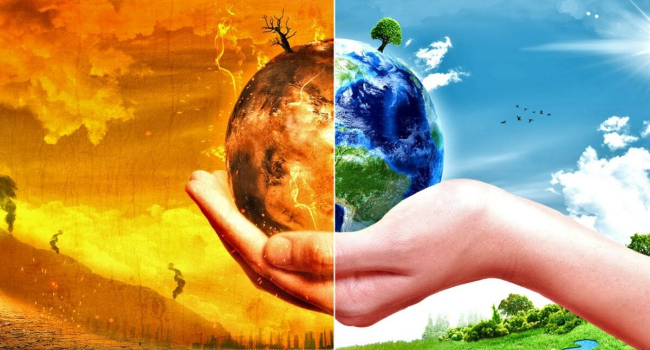
Global warming is inflicting irreversible damage on mountain glaciers, and even if humanity manages to lower the planet’s temperature, their recovery would take centuries. This conclusion was reached by scientists from the University of Bristol (UK) and the University of Innsbruck (Austria). Their study, published in Nature Climate Change, shows that glaciers cannot quickly return to their former state due to the effects of overheating.
Modeling the Climate Future
The researchers modeled a scenario in which global temperatures rise by 3°C by 2150 and then gradually fall to a relatively safe 1.5°C by 2300. This forecast accounts for current rates of carbon dioxide emission reductions and the potential delayed adoption of carbon capture technologies. The results revealed that in the “overheated” scenario, glaciers would lose up to 16% of their mass by 2200 and up to 11% by 2500 compared to a world where warming did not exceed 1.5°C.
These losses are irreversible: even if the planet cools, glaciers will not recover within the lifespan of several generations. “People often ask: if we cool the Earth, will glaciers grow back? Our study proves this won’t happen for centuries,” said Dr. Fabian Mossion, one of the study’s authors.
Consequences for Humanity
The reduction in glacier mass threatens millions of people who depend on meltwater for drinking, irrigation, and hydropower, especially in arid regions. Additionally, melting glaciers contribute to rising sea levels, heightening risks for coastal areas. Scientists emphasize that the longer humanity delays emission reduction measures, the more devastating and long-lasting the consequences will be.
An Ancient Lesson: The Paleocene-Eocene Thermal Maximum
What Happened 56 Million Years Ago?
An international team of scientists from China, Australia, Italy, and the Netherlands studied an ancient warming period known as the Paleocene-Eocene Thermal Maximum (PETM), which occurred 56 million years ago. During this time, Earth’s temperature rose by more than 5°C due to the release of 3,000 to 20,000 petagrams of carbon into the atmosphere (1 petagram equals one billion tons). This triggered significant changes in ecosystems and oceans, creating a prolonged greenhouse state.
A new study, published in Geophysical Research Letters, clarifies that the PETM’s effects lasted about 269,000 years—far longer than previously estimated (120,000–230,000 years). The climate recovery period spanned over 145,000 years, underscoring how slowly the planet copes with carbon overloads.
Lessons for Today
Modern anthropogenic warming has already resulted in the emission of approximately 2,390 petagrams of carbon dioxide from 1850 to 2019. If fossil fuel use continues, an additional 5,000 petagrams could be released into the atmosphere in the coming centuries. The disruption of the carbon cycle caused by such emissions could persist for 3,000 to 165,000 years, creating climate changes that will impact dozens of generations.
Why It Matters
Both studies highlight that climate changes have long-term, often irreversible consequences. Glaciers melting due to temporary overheating will not recover even if temperatures drop, and carbon emissions create a greenhouse effect that could last millennia. Hopes for carbon capture technologies or planetary cooling will not suffice unless action is taken immediately.