make preferable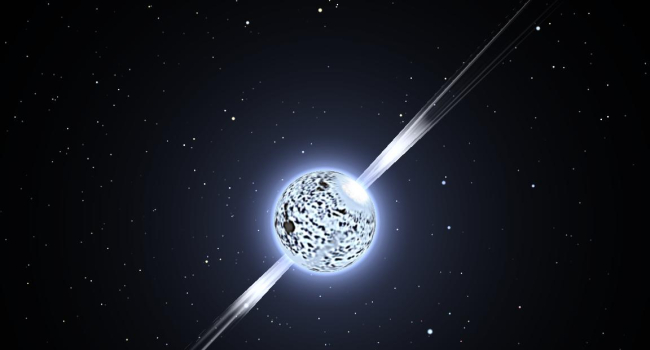
An international team of scientists from China and Australia has achieved a breakthrough by determining the initial mass of newborn neutron stars. This discovery sheds new light on the formation of these ultra-dense objects and refines our understanding of neutron star mergers detected through gravitational waves. The study was published in Nature Astronomy.
What Are Neutron Stars?
Neutron stars are the remnants of massive stars that end their lives in spectacular supernova explosions. Despite having masses between one and two times that of the Sun, they’re compressed into a mere 10-kilometer diameter, making them extraordinarily dense.
Until now, scientists could only measure neutron star masses in binary systems, where they orbit alongside a companion—like a white dwarf or another neutron star. However, these stars often gain extra mass through accretion, muddying efforts to pinpoint their original weight at birth.
Research Method and Findings
The team analyzed data from 90 neutron stars, employing a probabilistic approach to account for mass gained post-formation. Their findings reveal that newborn neutron stars typically weigh around 1.3 solar masses, with heavier ones being far less common.
“Our method has allowed us, for the first time, to determine the mass of neutron stars at the moment of their creation—a major leap in unraveling these enigmatic objects,” said Professor Xinjiang Zhu from Beijing Normal University.
Why It Matters
These results will refine stellar evolution models and enhance our interpretation of gravitational wave signals captured by detectors. They also bring us closer to understanding the cosmic processes that unfold after supernovae, shaping neutron stars and the universe at large. This milestone marks a pivotal step forward in astrophysics.